
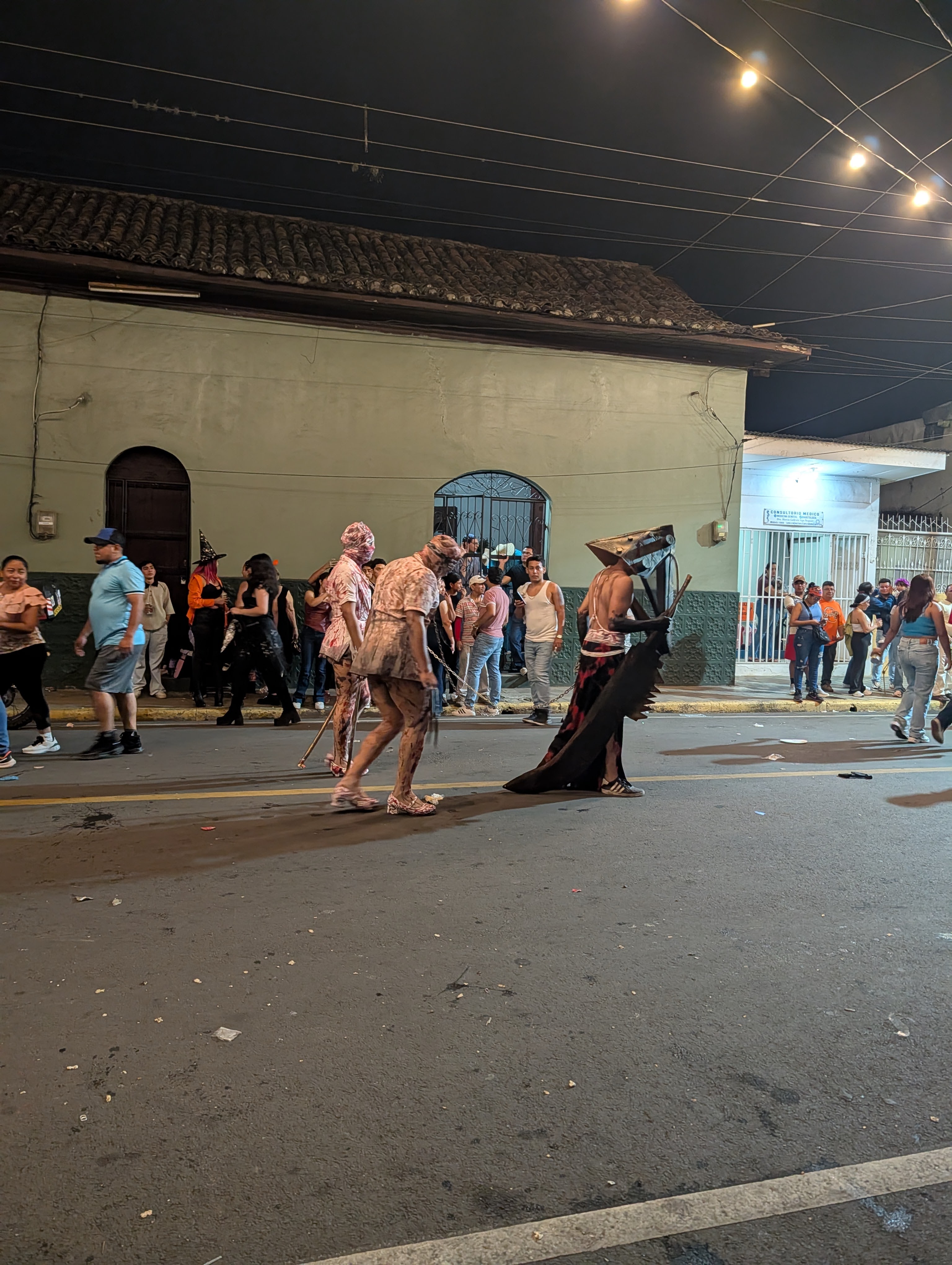
A Night In Monimbó
The Awakening Of Los Agüizotes
Los Agüizotes in Masaya, Nicaragua
Not an imported Halloween. A cry of ancestral identity.
On the last Friday of October, Masaya fills with the spirits of Nicaraguan folklore: La Cegua, La Llorona, El Cadejo, the Chancha Bruja and many more. The procession begins at nightfall in the indigenous neighborhood of Monimbó and moves through the city to the sound of brass bands, candlelight and a crowd that comes to be scared on purpose.
Before stepping into the dark streets of Masaya, you should understand what you are about to face.
For generations, these figures lived in the stories our grandparents told to keep us from wandering at night. In Masaya, they never stayed inside the stories. This guide is our invitation to meet them in person.
Everything you need to know before the night begins.
Part of the festivities for San Jerónimo, Masaya’s patron saint.
The procession starts at Plaza Magdalena and crosses the city.
Food, candlelight and costumes shown on the last Thursday.
A short drive from Managua or Granada.
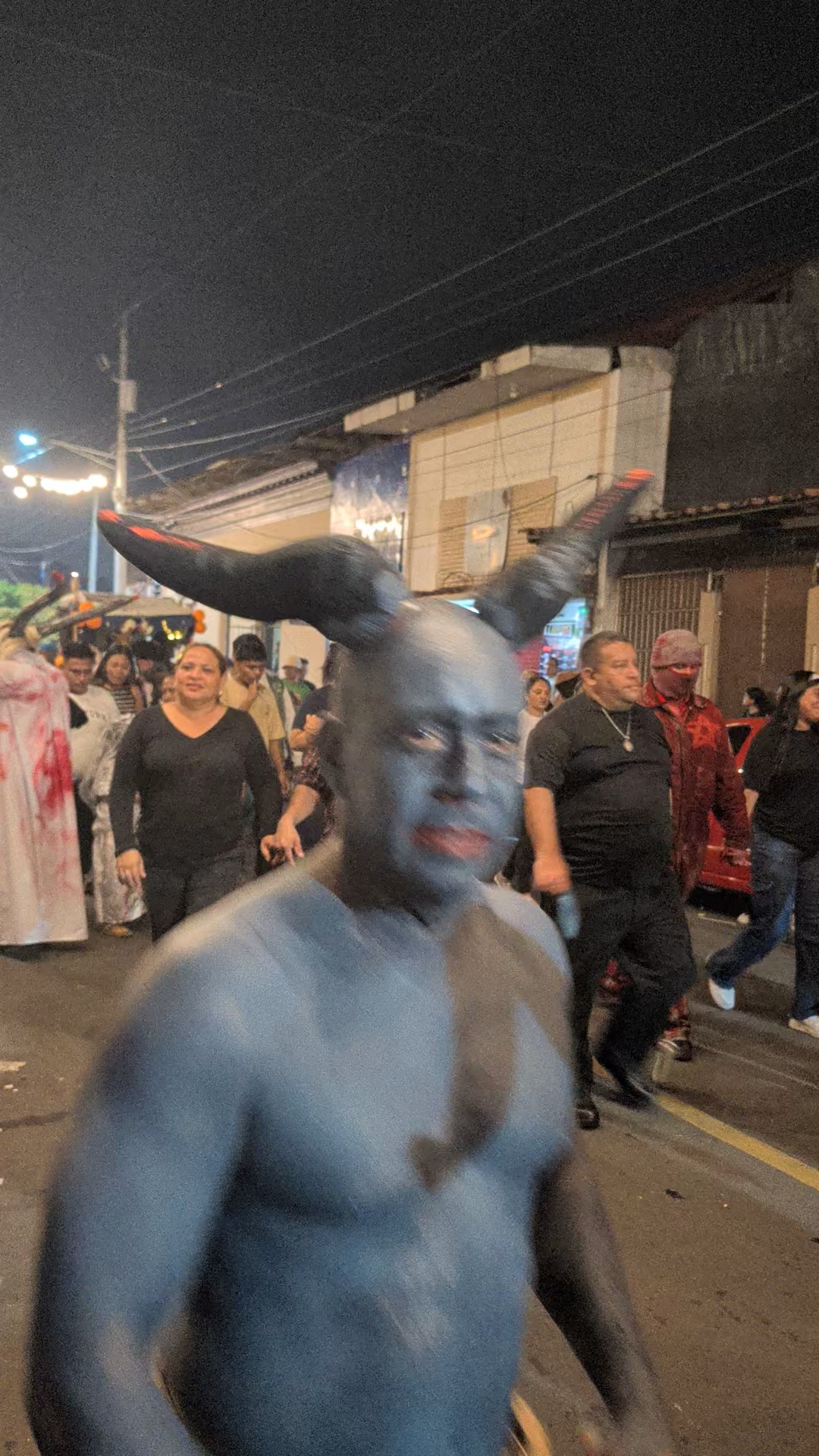
Spirits Near The Water
The name says a lot before the procession even begins.
Agüizote comes from the Náhuatl Ahuitzotl, usually translated as “spirits near the water” or “water myths.” In Masaya, the word came to mean something broader: the apparitions, frights and mysterious beings that appear on lonely roads, by rivers and in the dark corners of old stories.
Los Agüizotes is the night those beings are given a face. Neighbors become legends, masks become characters, and the city turns into a stage where fear and celebration walk side by side.
It is a ghost story told by an entire town.
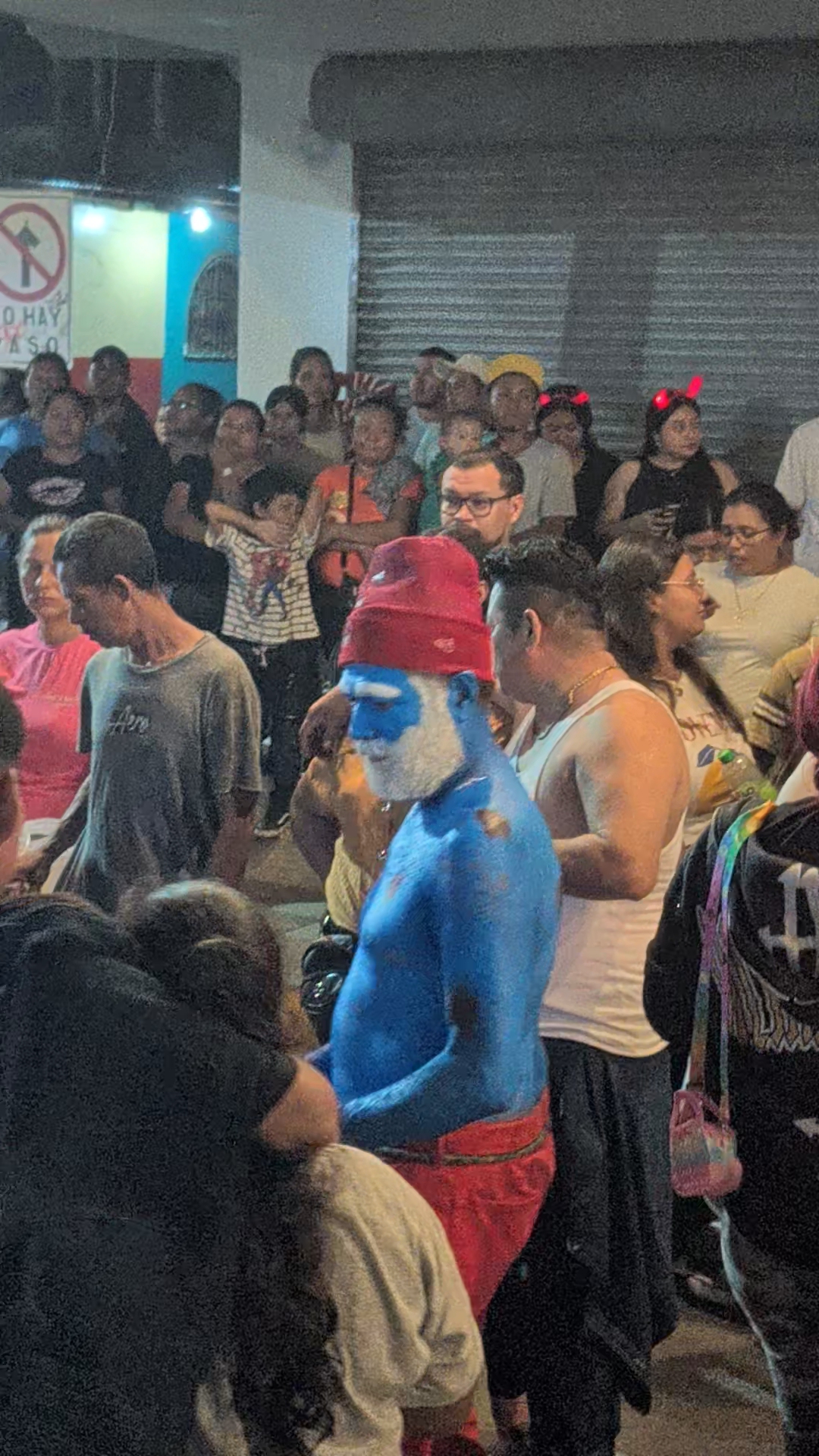
Born In Monimbó
To understand Los Agüizotes, start with Monimbó.
The tradition grew from this historic indigenous neighborhood in the second half of the 20th century, and the procession as it is known today is commonly traced back to 1976. Its purpose was simple: rescue the legends and horror stories our grandparents used to scare us into coming home early, and keep them alive.
Local accounts go further back, to the colonial period, when indigenous people held on to their own beliefs and, according to the stories passed down, used their frightening spirits to unsettle the Spanish. That is why many in Masaya describe Los Agüizotes as a carnival of cultural resistance.
Today it is woven, almost surreally, into the festivities for San Jerónimo, Masaya’s patron saint. It is Nicaraguan syncretism at its clearest: the sacred and the profane walking down the same street.
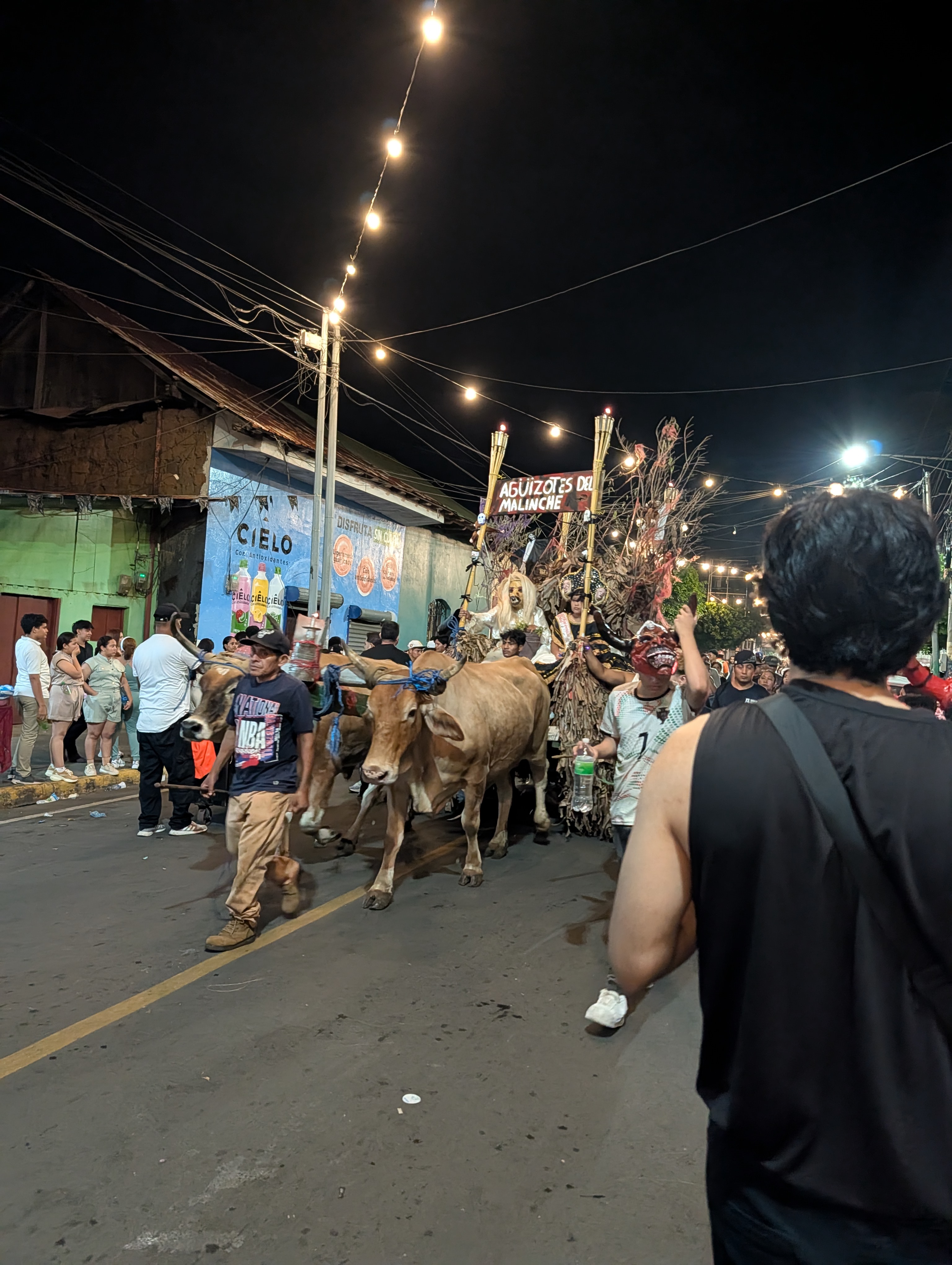
Meet The Legends
If you go, know what you will see. There are no plastic superhero costumes here.
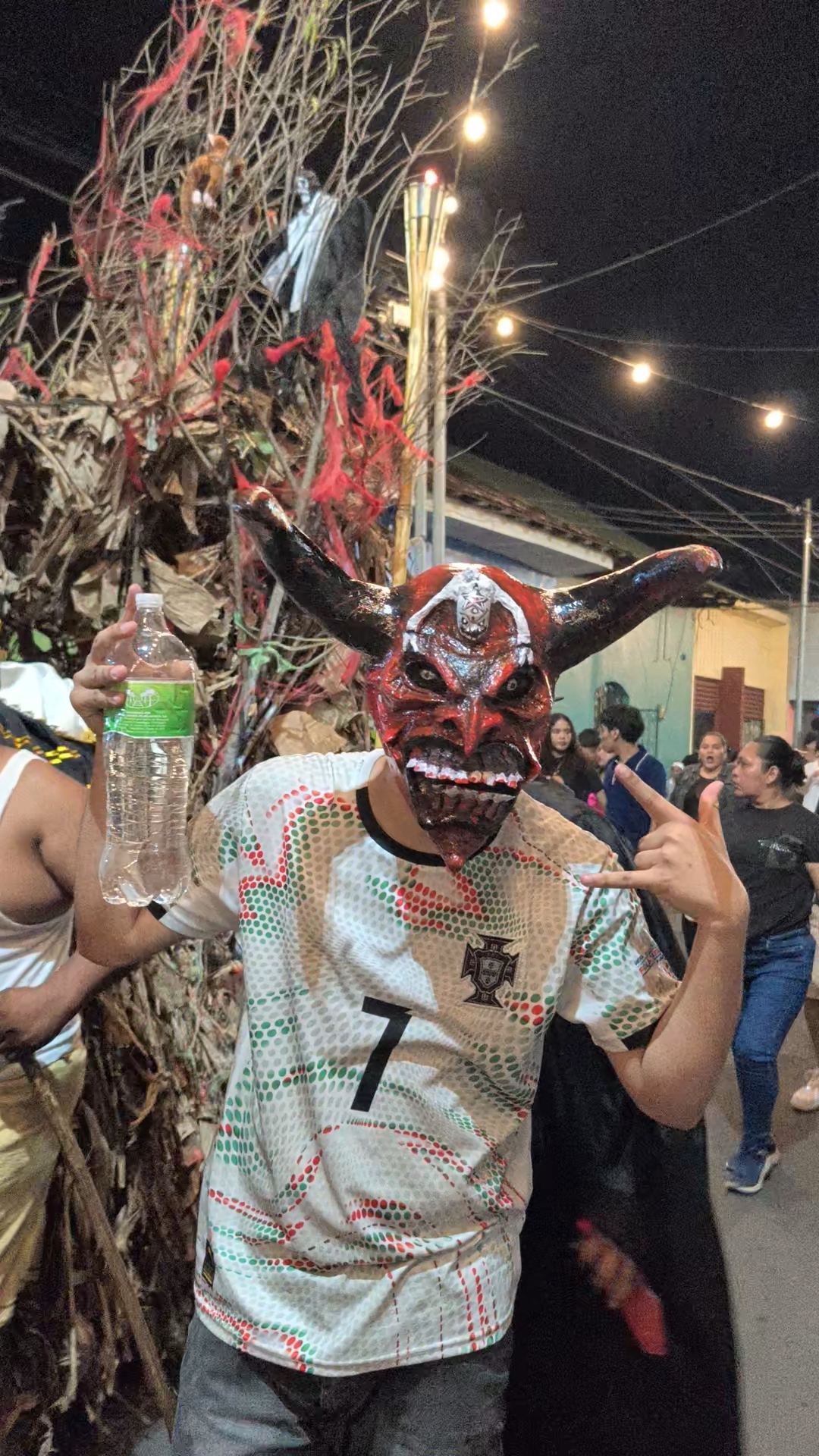
What walks through Masaya are true works of grotesque art, made of papier-mâché, cloth, horsehair and cow horns, shaped by the hands of Monimbó’s artisans.
La Cegua hunts men walking home late at night. La Chancha Bruja, the witch who turns into a pig, chases those returning from parties. El Cadejo, white or black, appears on lonely roads. La Llorona cries for her lost children, and La Mocuana lures travelers away.
El Padre sin Cabeza walks without a head, and La Carreta Nagua announces itself with creaking wheels and dragging chains. Around them move devils, skeletons and La Muerte. Each mask carries a story someone once told in the dark.
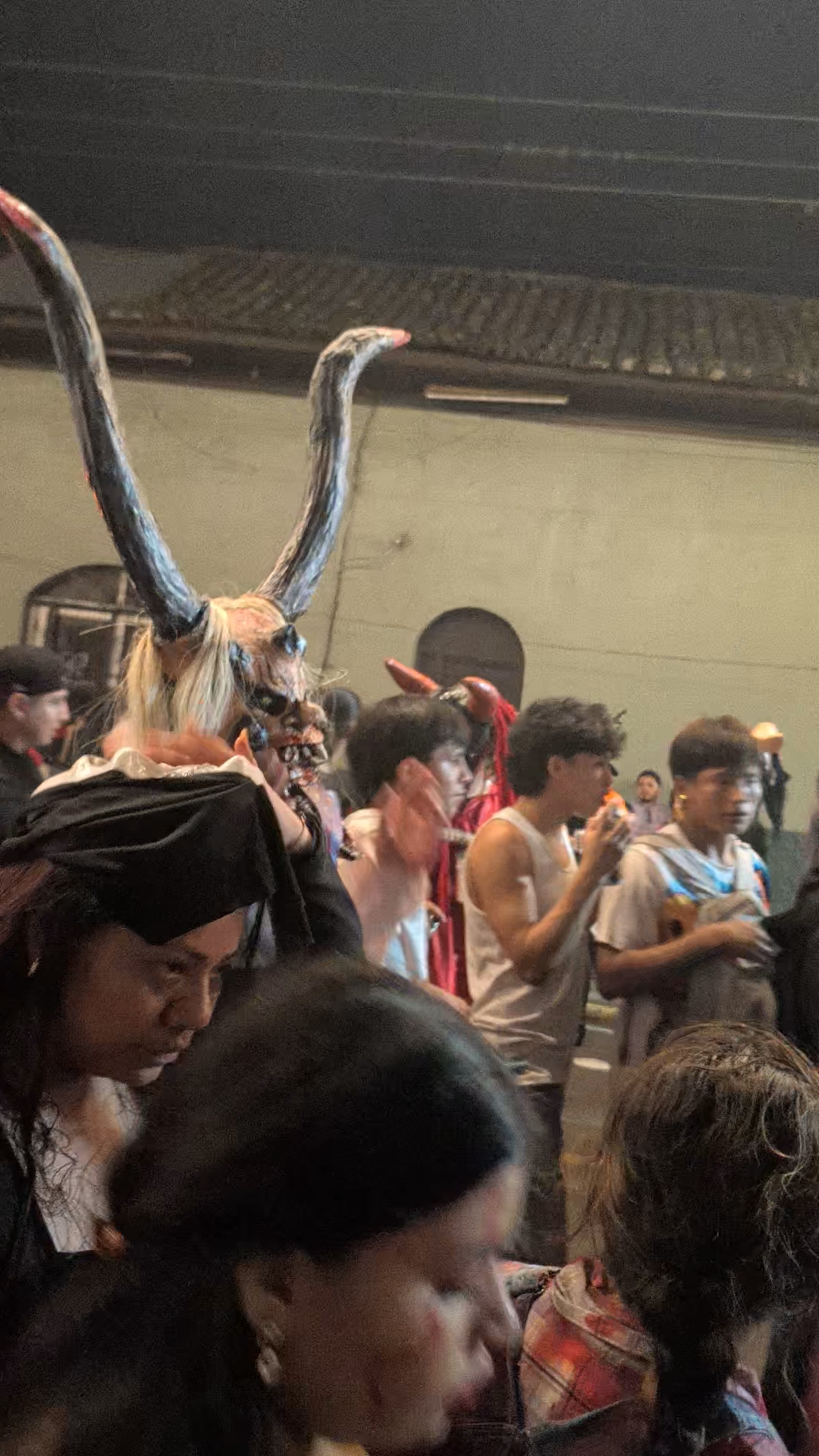
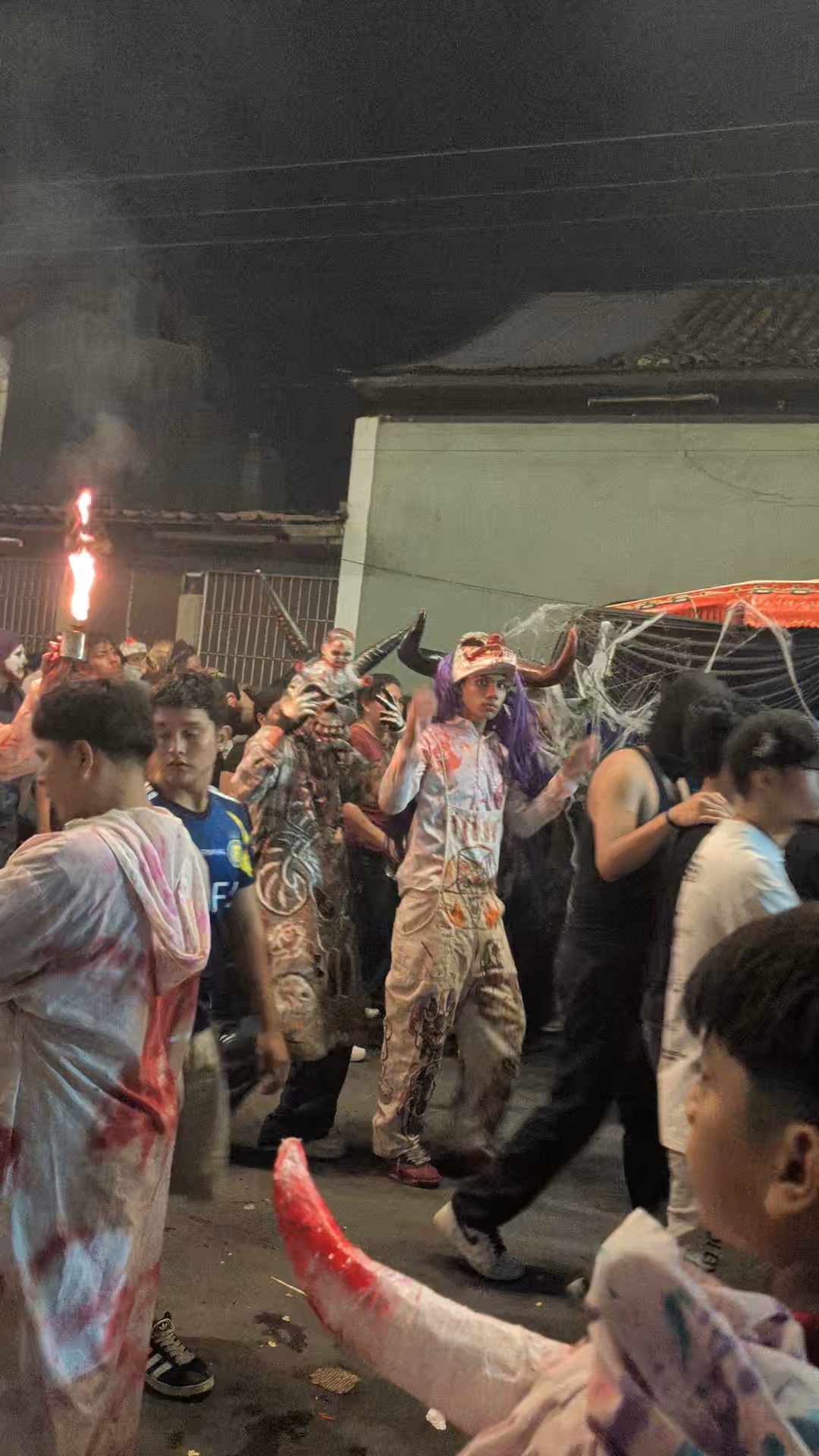
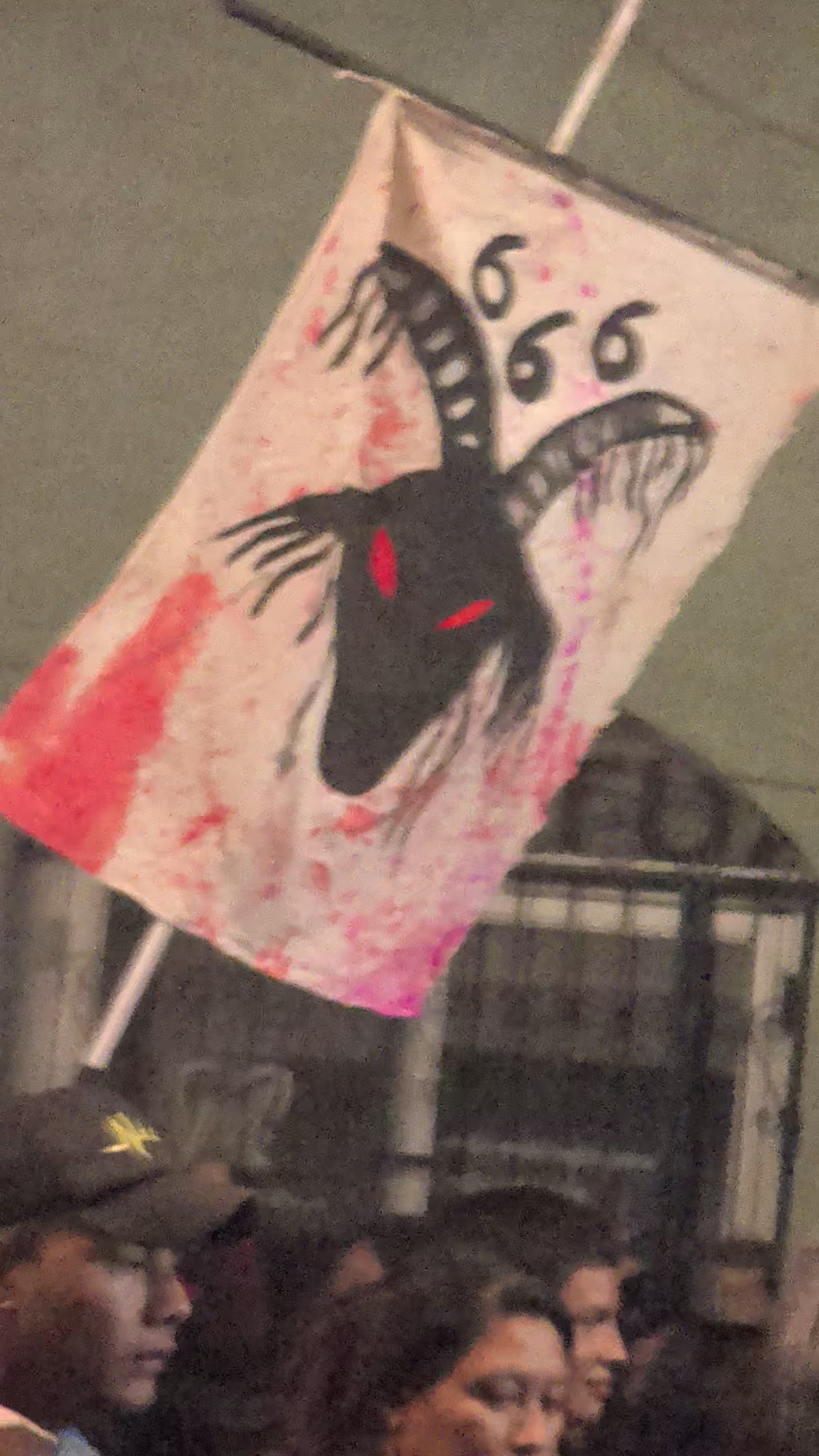
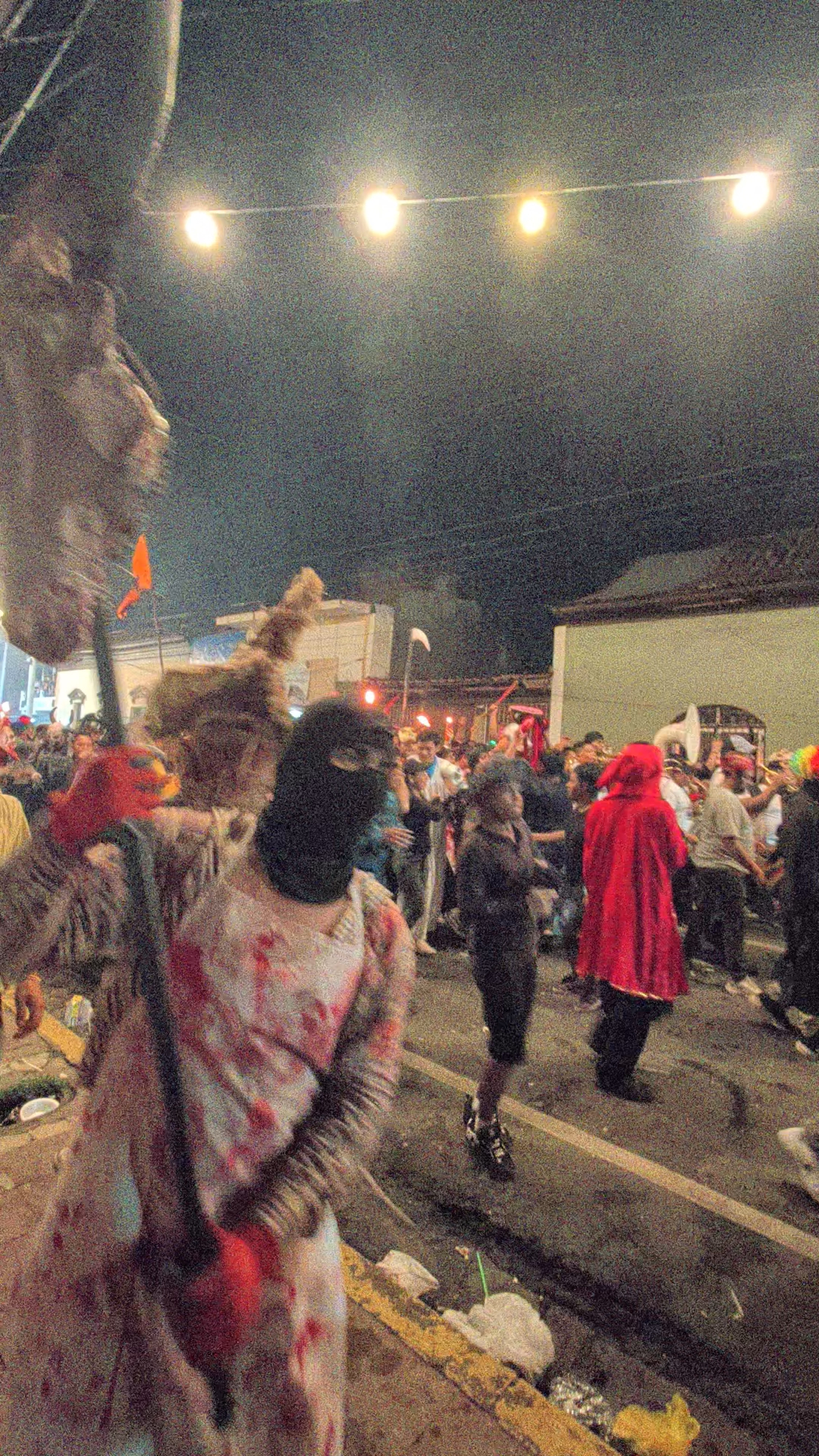
Photos by @blue_heightss
The Night Before: La Vela Del Candil
The legends do not arrive without warning.
On the last Thursday of October, one night before the procession, Monimbó celebrates La Vela del Candil. Families prepare traditional food and display the costumes and masks they will wear the following evening.
It is quieter and more intimate than the procession, lit by candles and lamps rather than crowds. If the Friday is the performance, the Thursday is the rehearsal at home.
I went to cover the procession for NAVAO, hoping to capture that cultural pride. But the night of Los Agüizotes has its own rules, and I was about to discover my worst nightmare.
The Descent
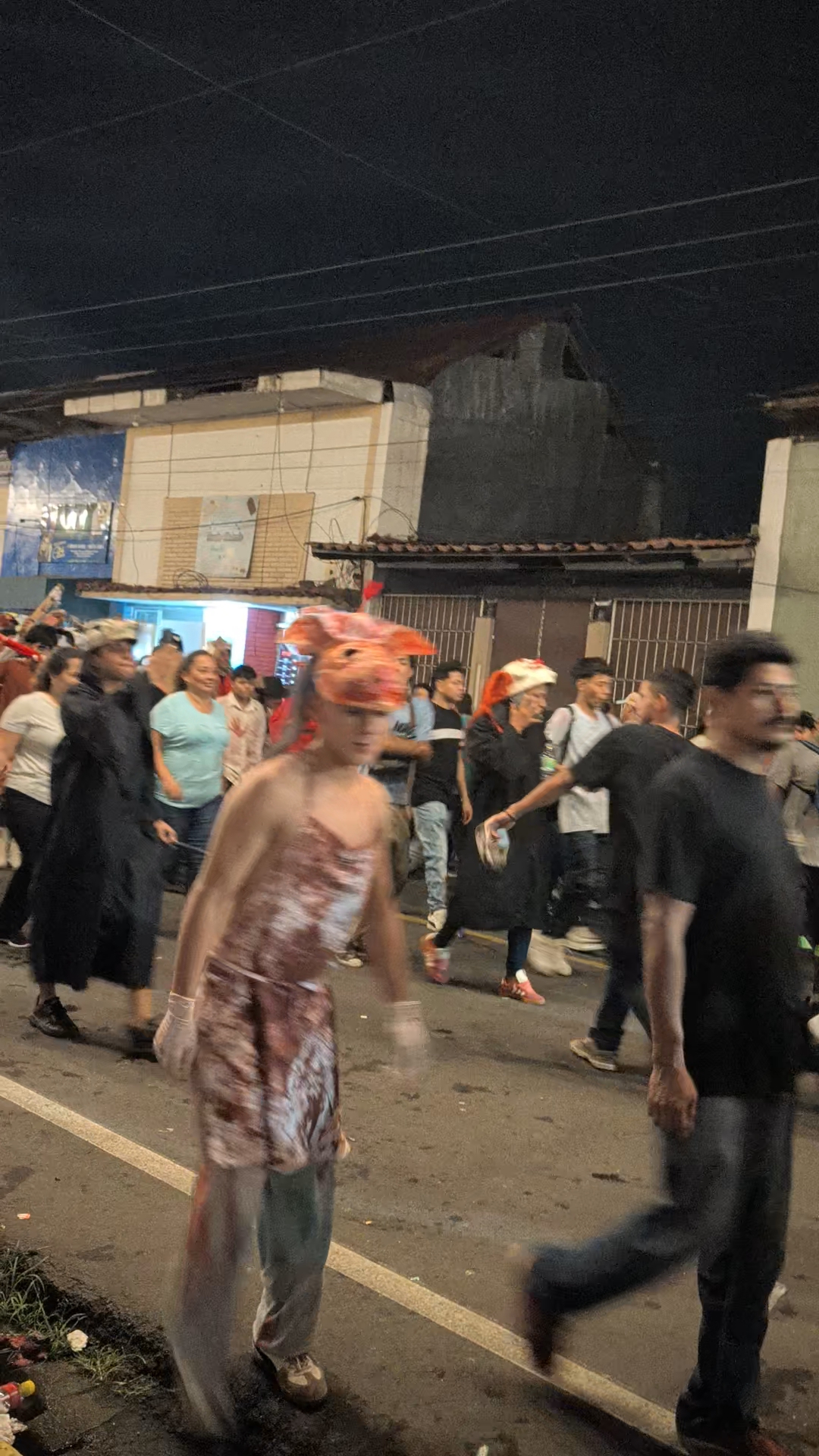
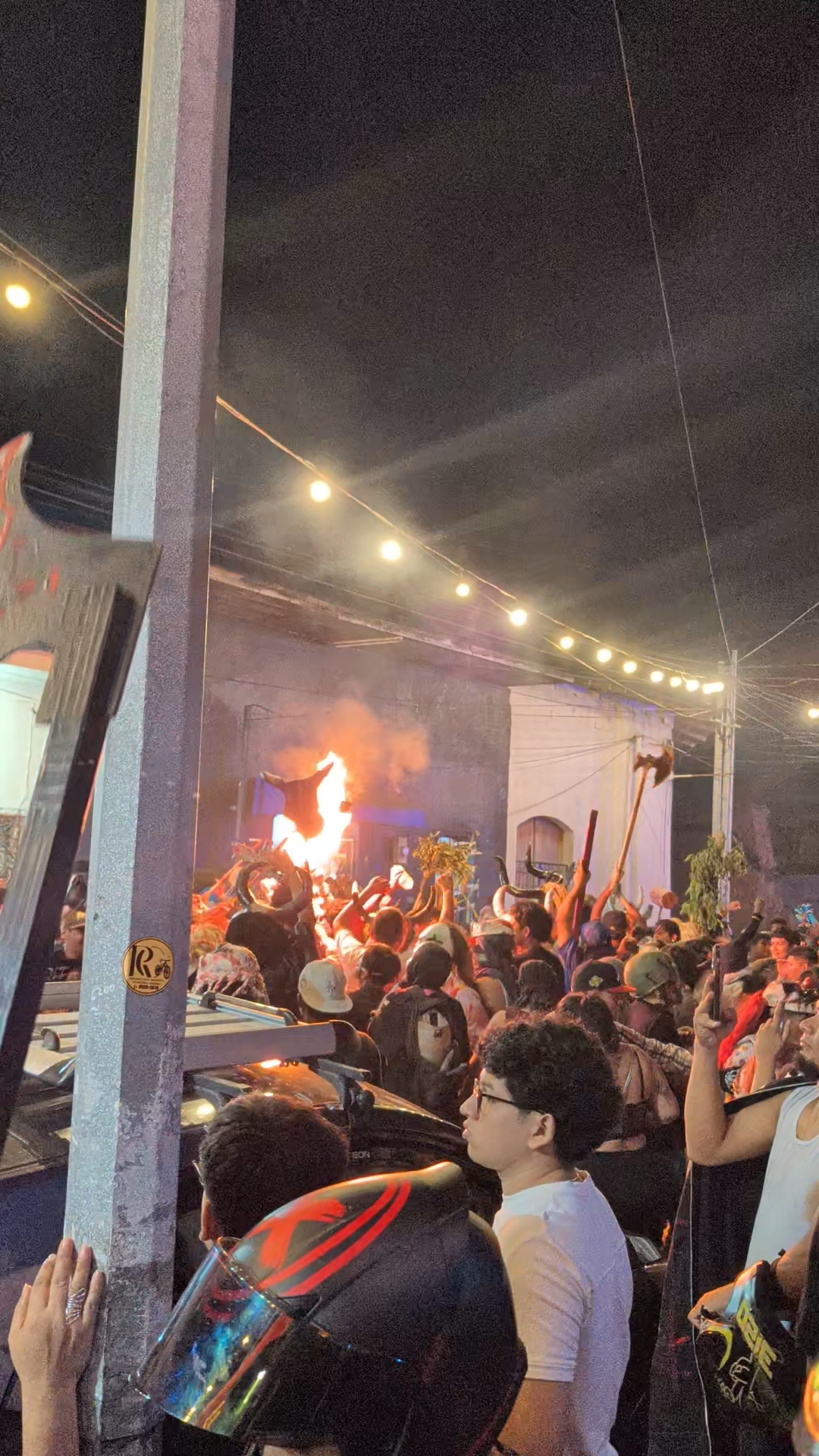
The fog did not fall from the sky that night. It rose from the hot asphalt. The streetlights had been turned off on purpose. The only thing cutting through the absolute darkness was the flicker of hundreds of oil lamps, throwing long, twisted shadows across the adobe walls. The air grew thick, almost unbreathable, heavy with the smell of burnt kerosene and gunpowder.
The sound began far away. A rumble of hoarse drums and the distorted wail of the chicheros, the traditional musicians, playing a funeral march at a frantic pace that made my teeth vibrate. The crowd, a tight and sweaty mass, pushed me toward the middle of the street.
Then I saw them. The beings the elders swear they have seen in the hills.
A woman wrapped in white rags dragged her feet past me, letting out a cry so harrowing it froze my blood. It was La Llorona, but it was not a performance. Her eyes, visible through the mask, were bloodshot with madness. Further ahead, a hypnotized man followed a slender woman with long hair. When she turned, the bony face of a horse skull stared back at him. La Cegua was hunting.
I tried to step back toward the sidewalk, but panic took over the crowd when the creak of heavy wooden wheels on the pavement announced the arrival of La Carreta Nagua. Legend says Death herself drives it, and the sound of its dragging chains sent people screaming, shoving and running in every direction.
In the middle of that suffocating chaos, a black, shaggy shape blocked my way. El Cadejo Negro did not walk; it stalked. Its red eyes glowed beneath a lonely lamp. I felt its icy breath on the back of my neck, freezing me in place, convincing me my soul would stay in Monimbó forever.
“And right at that moment of absolute,
supernatural terror…”
The Real Spirits Of The Night
…I felt the quick, subtle and expert brush of hands moving through my pockets.
I spun around and pushed the so-called monster away, but all I saw was a grinning pig mask disappearing into the sea of people.
The mystical terror vanished at once, replaced by a bucket of cold, hard reality. The spirits of Nicaraguan legend may have been looking for lost souls to drag into the underworld, but the flesh-and-blood demons hiding among them were after something else.
I reached for my pants. My phone was still there, because I had been gripping it tight. My wallet was gone, swallowed by the darkness and by the real spirits of the night.
NAVAO’s Guide To Surviving Los Agüizotes
The real terror of this festival does not always come from beyond.
Los Agüizotes is a mind-blowing cultural experience, a display of art and pride that every Nicaraguan and every traveler should live at least once. But thousands of people, the noise of the chicheros, the pushing and the darkness create the perfect stage for “spirits” with fast hands. If you are heading into the streets of Masaya, do it smart:
Leave your ego and your valuables at home. No gold chains, expensive watches or full wallets. Carry only your ID and the cash you plan to spend, in your front pockets, ideally with a zipper or buttons.
Keep your phone under strict custody. If you take it out to film La Mocuana or snap a photo with El Padre sin Cabeza, hold it firmly with both hands. Quick grabs in the middle of the procession are common.
Build your squad. Go in a group and do not let go of each other. The human tide can separate you from your friends in seconds. Agree on a safe, well-lit meeting point, such as a nearby gas station or the central park, in case the crowd pulls you apart.
Dress for battle. Wear old, closed shoes and clothes you do not mind ruining. You will get stepped on, you may get hot wax or kerosene on you, and you will sweat like never before. This is not a fashion runway. It is a carnival of spirits.
Masaya is about 26 kilometers from Managua and a short drive from Granada. People gather at Plaza Magdalena in Monimbó as evening falls, and the procession moves toward the central park. Private transportation can drop you off before it begins and pick you up afterward, so you never have to look for parking or a ride late at night.
All photographs in this guide by @blue_heightss. Used with permission. Please do not reproduce without credit.
What are Los Agüizotes in Masaya?
Los Agüizotes is a night procession in Masaya, Nicaragua, where hundreds of people dress as the spirits and legends of Nicaraguan folklore, such as La Cegua, La Llorona, El Cadejo and the Chancha Bruja. It is rooted in the indigenous neighborhood of Monimbó and is part of the festivities for San Jerónimo, Masaya’s patron saint.
When is Los Agüizotes celebrated?
Los Agüizotes takes place on the last Friday of October. The night before, on the last Thursday of October, Monimbó celebrates the Vela del Candil, when families prepare traditional food and show the costumes and masks they will wear in the procession.
Is Los Agüizotes the same as Halloween?
No. Los Agüizotes is a Nicaraguan tradition built around local legends passed down through generations in Masaya. Some modern horror characters now appear in the procession, but the heart of the celebration remains Nicaragua’s own folklore.
Is Los Agüizotes safe for visitors?
It is a crowded, dark and chaotic street event, so the main risk is petty theft. Leave valuables at home, carry only your ID and the cash you need in front pockets, hold your phone firmly, stay with your group and agree on a well-lit meeting point. Closed shoes and old clothes are recommended.
How do you get to Los Agüizotes from Managua or Granada?
Masaya is about 26 kilometers from Managua and a short drive from Granada. Because the procession ends late at night and the streets are crowded, many visitors prefer private transportation that drops them off before the event and picks them up afterward. NAVAO offers private transportation for exactly this kind of trip.
This Is Not
Halloween.
You could see Los Agüizotes as a costume party: masks, screams, music and a crowd looking for a good photograph.
But behind every mask there is a grandmother’s story, a lonely road, a warning whispered to children who stayed out too late. There is a neighborhood that refused to let its beliefs disappear.
Los Agüizotes is folklore and resistance. It is fear turned into celebration, and memory turned into a parade that walks through the same streets every year.
It is not a night to watch from a distance.
It is a night to walk with the legends.
Meet the legends.
Leave the ride home to us.
NAVAO offers private transportation designed around your route, your group and your schedule. Travel from Managua, the airport, Granada or anywhere in Nicaragua, arrive in Masaya before the procession begins and return safely once the night is over. No parking. No late-night searching for a ride. Just a more personal way to discover Nicaragua.
© 2026 NAVAO · The NAVAO Guide · Private transportation across Nicaragua · Photography by @blue_heightss