

Getting Around Nicaragua:
Complete Transportation Guide
Bus, shuttle, private driver, ferry or flight. How to pick the right one for each leg.
Most trips use three or four kinds of transportation, not one.
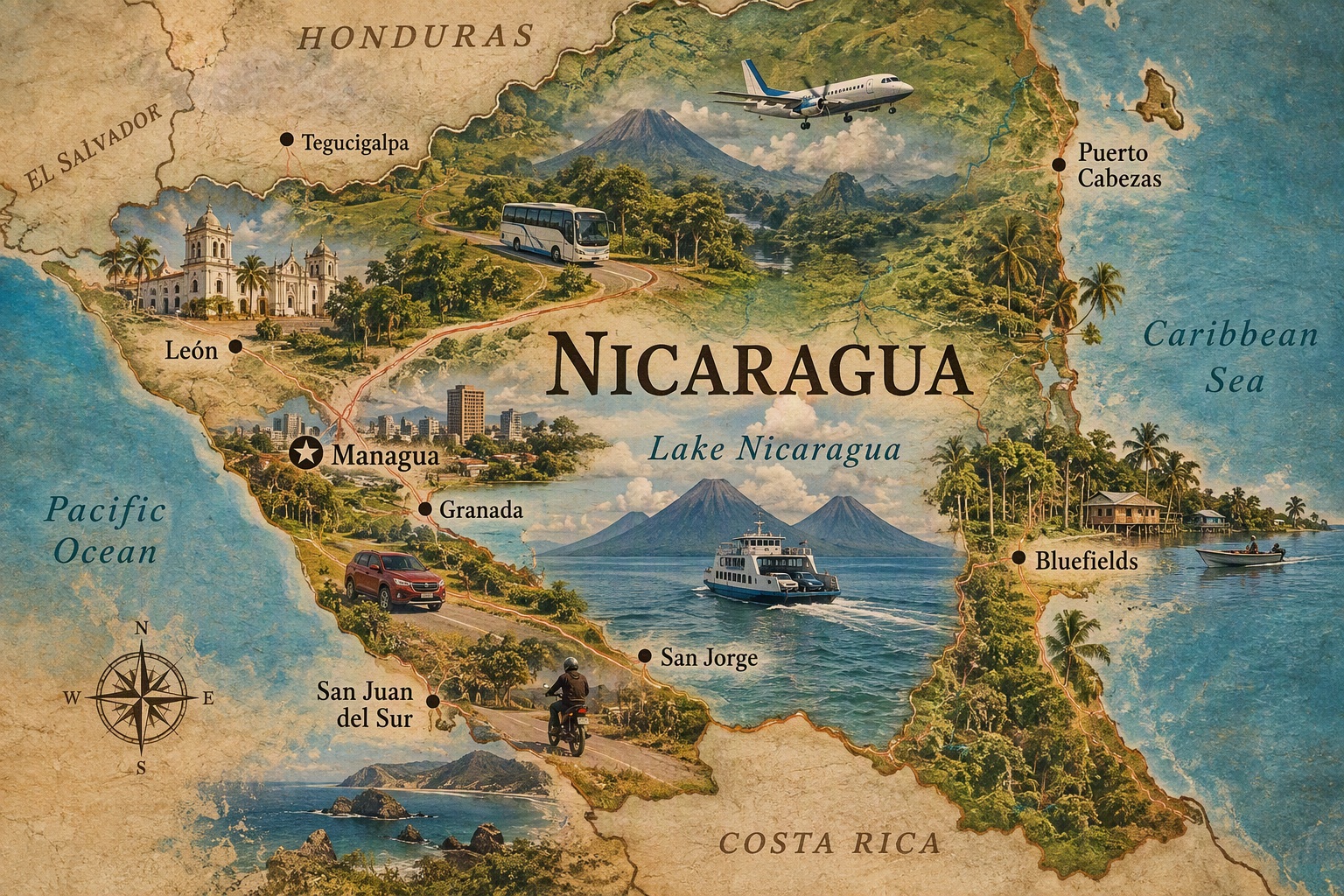
Nicaragua is compact enough that almost everything on the Pacific side is within a few hours of Managua. What changes from leg to leg is not the distance. It is how much you are willing to trade money for time, comfort and control.
Intercity buses and minibuses cost the least and go almost everywhere. Shared shuttles cost more and remove the terminal. Private drivers cost the most and remove everything else: the transfers, the luggage handling, the waiting. Rental cars buy independence at the price of managing insurance, navigation and road conditions yourself. Ferries are not optional where the water is, and domestic flights turn a full day on the road to the Caribbean into a little over an hour.
The most practical plan is usually a mix. A shuttle to Granada, a bus to León, a private transfer on the day you land with all your luggage. Decide leg by leg, not once for the whole trip.

Buses and Minibuses
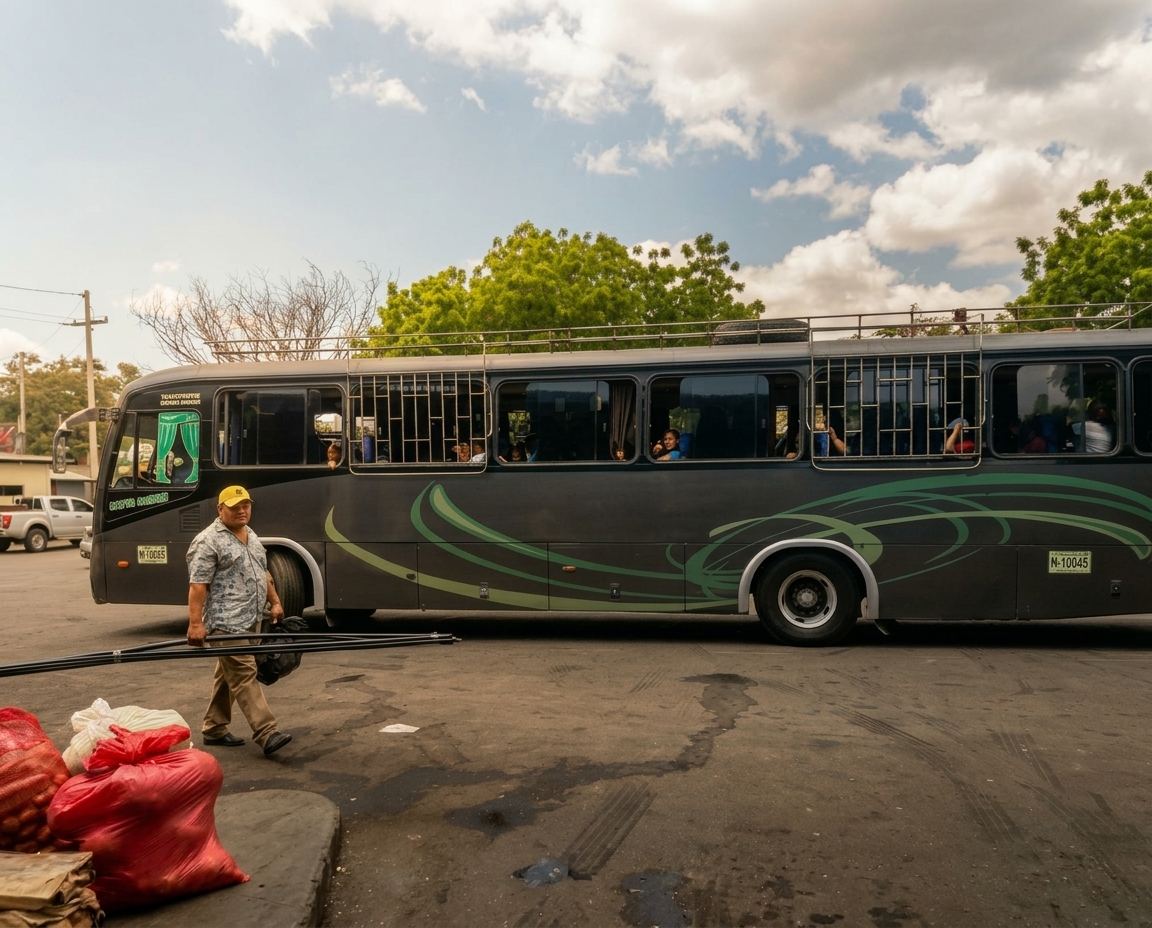
Buses carry most of Nicaragua, and they will carry you too for a fraction of anything else. Expect traditional buses, express services or minibuses depending on the route.
One thing catches visitors off guard: the system is built for people who already know it. There is no central reservation site, no printed timetable at the door, and schedules live mostly in the knowledge of the people working the terminal.
In Managua the terminal matters more than the destination, because different terminals serve different halves of the country. Roberto Huembes covers the southern corridor: Granada, Masaya, Rivas, San Jorge and San Juan del Sur. Israel Lewites covers the northwest, including León and Chinandega. El Mayoreo serves the north, center and east. The Casimiro Sotelo university terminal runs minibuses to places including Masaya and Granada.
Go to the wrong one and you have lost an hour crossing Managua. Confirm where your specific service leaves from before you get in a taxi.
Your budget matters more than your schedule, the route is direct, and you can absorb an unexpected wait without losing the day.
Buses fill up, luggage space is whatever fits, and some routes need a transfer. Two large suitcases, a surfboard, camera gear or a small child can flip the math quickly.
Shared Shuttles and Tourist Transfers
Shuttles are the middle ground: smaller vehicles, routes built around where travelers actually go, and a pickup that usually happens at your hotel instead of a terminal.
For a solo traveler or a couple, this is often the best value on the whole list. You get most of the convenience of a private vehicle without paying for the empty seats.
What you give up is control of the clock. Departure times are fixed, pickup windows are fixed, and some routes only run once they have enough passengers. Confirm the luggage allowance and the minimum before you pay.
Solo travelers and couples on common routes who would rather pay a little more than navigate a terminal.
Private Transportation and Private Drivers
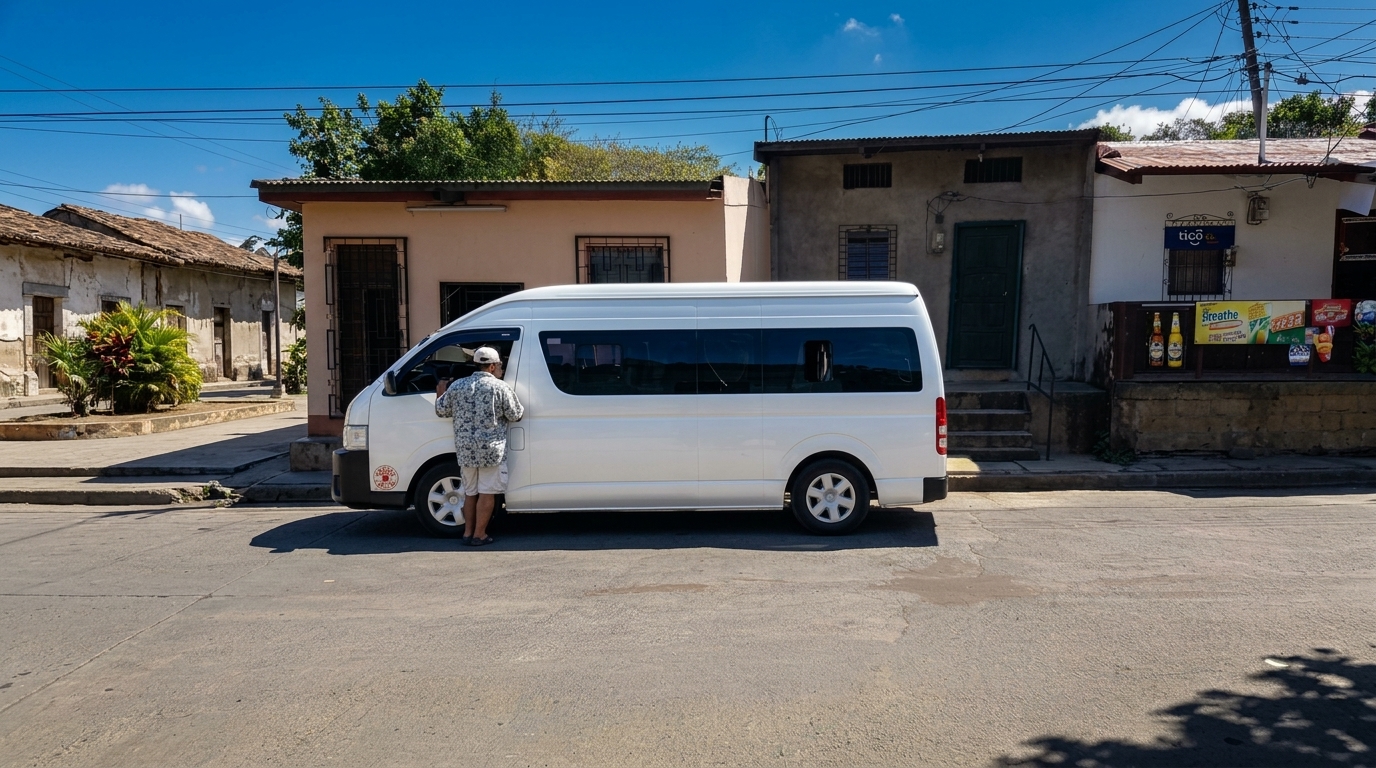
Private transportation is what you choose when the travel day itself is the problem: a late arrival, four bags, a group that will not fit in a shuttle, or three stops you want to make between two cities.
The vehicle is yours. The pickup happens where and when you say, and nothing about the day depends on another passenger showing up.
For a couple it is the most expensive option on this page. For a family of five or a group of eight, the cost per person often lands close to a shuttle, with none of the schedule constraints.
The honest limitation: if you are traveling light, on a flexible schedule, and keeping costs down is the point of the trip, you do not need a private driver for every leg. Most travelers who use one use it for two or three legs, not ten.
NAVAO provides private transportation across Nicaragua for exactly this kind of use: the legs where a direct pickup genuinely makes the day easier, not as a replacement for every other option.

Renting a Car in Nicaragua
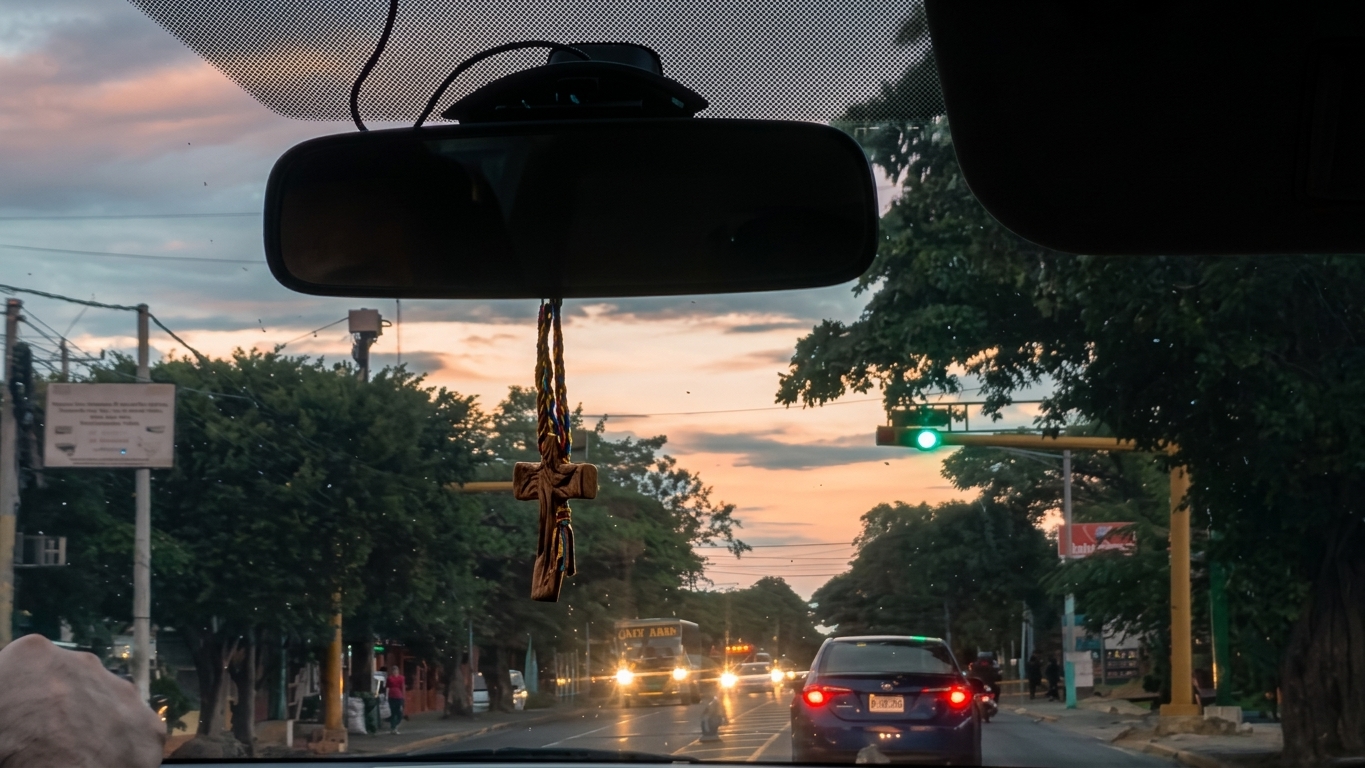
A rental car is the only option here that lets you change your mind at noon. Stop at a mirador, skip a town, stay an extra hour somewhere you did not expect to like.
Before booking, confirm the license, minimum age, deposit, insurance and credit card requirements, and read what the insurance actually covers. Deposits and coverage terms vary enough between companies to change the real price.
Paved highways on the Pacific side are straightforward. The last few kilometers to a beach, a finca or a trailhead are often where the road changes character, and that is the part worth asking about before you commit.
If your destination involves an unpaved access road, steep entry or seasonal conditions, ask your accommodation directly whether a higher-clearance vehicle is the right call. They will know the road better than the rental desk.
Limited lighting, pedestrians, animals and unmarked hazards make driving after dark meaningfully harder. Current U.S. travel guidance for Nicaragua specifically flags inadequate lighting and poor road conditions. Check your own government’s current advisory and plan long drives to finish before sunset where you can.
Taxis and Local Transportation
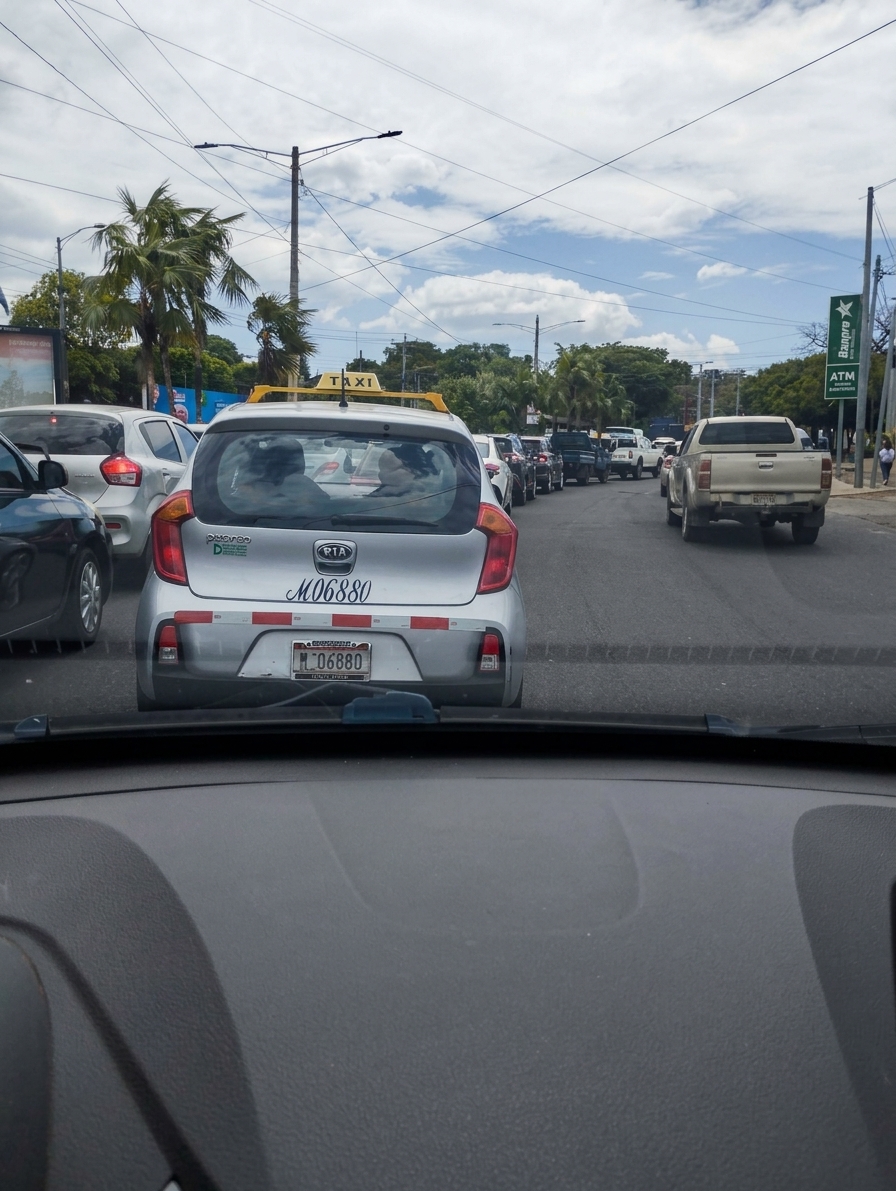
Taxis are everywhere in the cities and work well for short hops, hotel transfers and terminal connections. Most do not run meters, so agree on the fare before you get in, not after you arrive.
In Managua, ride-hailing apps including Ray and inDrive are also available. Coverage is uneven outside the city, so check the app before you build a plan around it.
For an airport arrival, a group, or a transfer between cities, arranging transportation ahead is usually less friction than negotiating at the curb with your luggage already out.
In smaller towns you will also see mototaxis. They are practical for short distances and part of how these places actually work, though vehicle standards vary.

Ferries and Boats
On some routes the water is not a detour, it is the road.
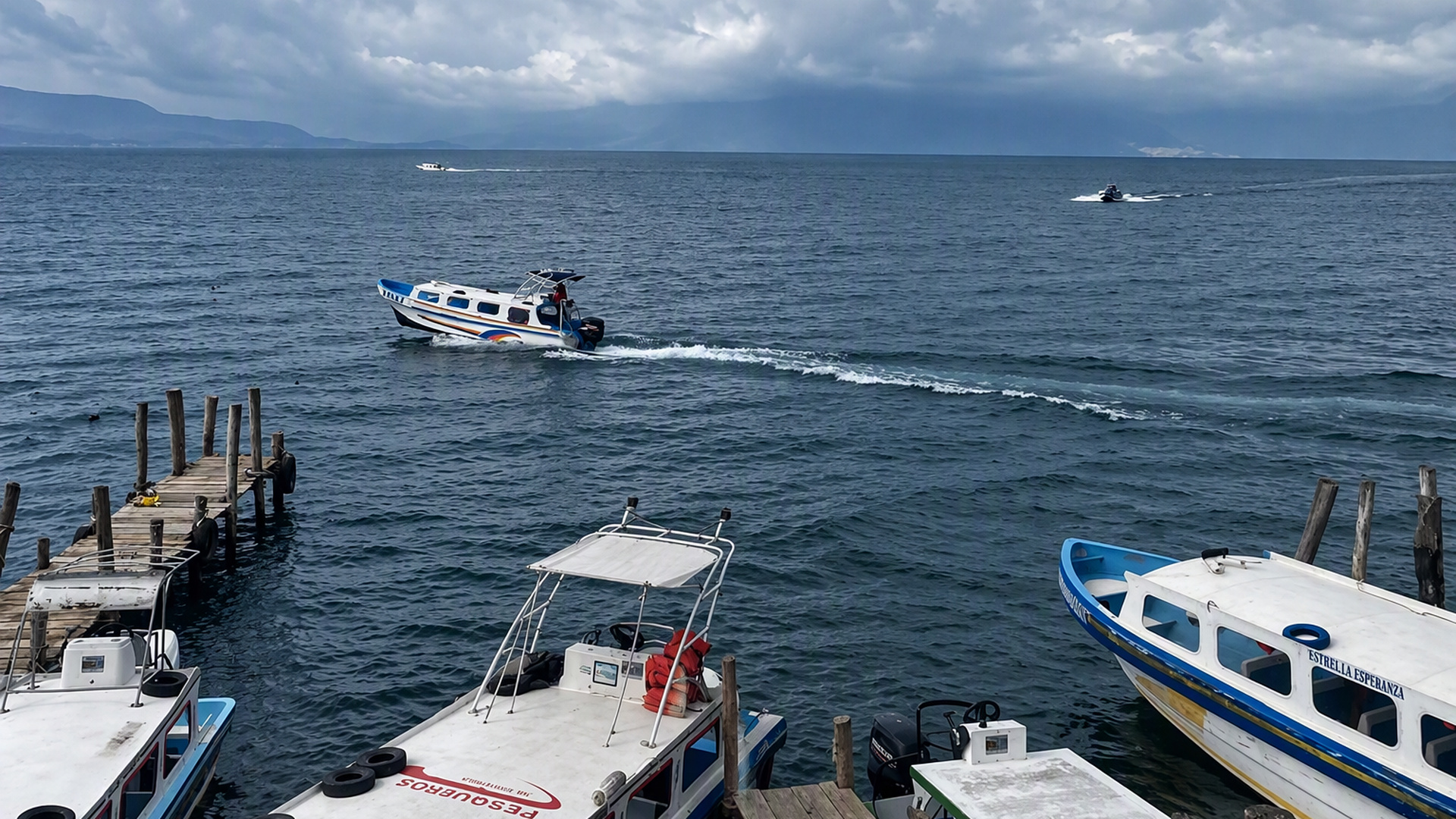
Ometepe is the clearest example. You reach the port of San Jorge by road, then cross Lake Nicaragua by ferry or passenger boat. There is no way around it, and that is part of the appeal.
Multiple sailings run the San Jorge corridor daily, but schedules move with weather, season and port operations.
Taking a vehicle across is a different process than walking on, with its own reservation and arrival requirements. Check current sailings the day before, and leave a buffer if something is waiting for you on the other side.
Boats and pangas also connect communities across the Caribbean coast and the Río San Juan. For those routes, confirm the operator, departure point and conditions locally rather than online.

Domestic Flights
For the Caribbean side, flying is less a luxury than a practical decision about how you want to spend a day.
La Costeña is the national carrier, flying from Managua to Corn Island, Bluefields and Puerto Cabezas. The airline has historically served additional inland destinations, so if you are headed somewhere else on the Caribbean or Río San Juan side, confirm directly with the airline that the route is currently operating before planning around it.
The time difference is the whole argument. Managua to Corn Island is roughly six hours and forty minutes of driving plus a six-hour ferry, or one hour and twenty-five minutes in the air. Bluefields is six hours and forty minutes overland against forty-five minutes flying. Puerto Cabezas is nine hours against one hour fifteen.
Schedules change without notice and baggage allowances on small aircraft are tighter than on an international flight. Verify both before you build the rest of the itinerary around a departure time.
Work out how you reach the departure airport and how you leave the arrival one. On short domestic routes, the ground connections can easily take longer than the flight.
How to Choose
No single option wins for a whole trip. Take the itinerary one leg at a time and the answer usually becomes obvious.
| Option | Best For | Cost | Planning Level |
|---|---|---|---|
| Bus / minibus | Budget-first travel on direct routes | Low | Moderate |
| Shared shuttle | Solo travelers and couples on common routes | Medium | Moderate |
| Private driver | Groups, families, luggage, multi-stop days | Higher | Low once booked |
| Rental car | Independent travel with flexible stops | Medium–higher | High |
| Taxi | Short local trips and terminal connections | Low–medium | Low |
| Ferry / boat | Ometepe and water-dependent routes | Varies | Moderate |
| Domestic flight | Caribbean and remote destinations | Higher | Moderate |
Take the bus when the route is direct and the savings matter more than the hour you might lose. Take a shuttle when you want the terminal removed but can live with a fixed departure.
Take a private transfer when the day has complications: luggage, a group, a late arrival, stops along the way. Rent a car when the freedom to change plans mid-day is worth managing the road yourself.
Use taxis for short distances rather than defaulting to them for long ones. Take the ferry where the water decides. Fly when a full day on the road buys you nothing.

Managua is a connection point, not a single station.
Almost every trip passes through Managua, and almost every first-timer expects one central bus station. There isn’t one. Routes leave from different terminals on opposite sides of the city.
If you are using public transportation, identify the right terminal before you leave the airport or your hotel. It is the single easiest hour to lose in Nicaragua.
A flight landing at Augusto C. Sandino often means a taxi across Managua before you can board anything headed out of the city. Count that transfer in your travel time, not just the intercity leg.
A prearranged transfer removes that step entirely and takes you from the terminal door to your destination. On a tight budget, the extra connection is usually worth the savings. After a long-haul flight with luggage, it usually is not.
Six Mistakes Worth Avoiding
How This Looks on a Real Itinerary
Landing in Managua and heading to Granada, you can compare a bus from Roberto Huembes, a shared shuttle, or a direct transfer, and the right answer depends mostly on your arrival time and how much you are carrying. A late-night landing with three bags points one direction. A midday arrival with a backpack points another.
For Ometepe, plan it as two decisions rather than one: getting to San Jorge, then crossing to the island. How you move once you are on Ometepe is a third decision entirely, and depends on where you are staying.
For Corn Island or Bluefields, compare honestly against the flight. A full day of overland travel plus a ferry against roughly an hour in the air is a different calculation than anything on the Pacific side.

There isn’t one. Most trips use a mix: buses or shuttles for straightforward legs, a private transfer on arrival days or with a group, a ferry where the route requires it. Decide leg by leg.
Yes, and cheaply. Intercity buses and minibuses connect Managua with every major city and tourist destination. The main thing to get right is which Managua terminal serves your route.
No. Most common itineraries work entirely on buses, shuttles, taxis and transfers. A rental car makes sense when you want to reach several places on your own schedule, particularly outside the main towns.
By road to the port of San Jorge, then by ferry or passenger boat across Lake Nicaragua. Check the day’s sailings before you travel, especially in the rainy season.
Yes. La Costeña flies from Managua to Corn Island, Bluefields and Puerto Cabezas. Confirm current routes, schedules and baggage limits directly with the airline before planning around a flight.
It depends on the day. For a solo traveler on a flexible schedule, usually not. For a group, a family, a late arrival with luggage, or a day with several stops, it often costs less per person than people expect and removes most of the friction.
For airport arrivals, private transfers, rental cars, ferries with a vehicle, domestic flights and travel around holidays, yes. For a midweek bus between two Pacific cities, rarely necessary.

Your route will be a combination. We can handle the parts that need to be simple.
A good transportation plan matches the trip you are actually taking. A bus on one leg, a ferry on another, a private transfer on the day you land at midnight with all your luggage.
Tell us where you are going, your dates and your group size, and we will help you plan private transportation for the legs where it makes sense. If a bus is the better call for part of your route, we will say so.
Written by Antonio Otero · Published by NAVAO · Updated September 2026