
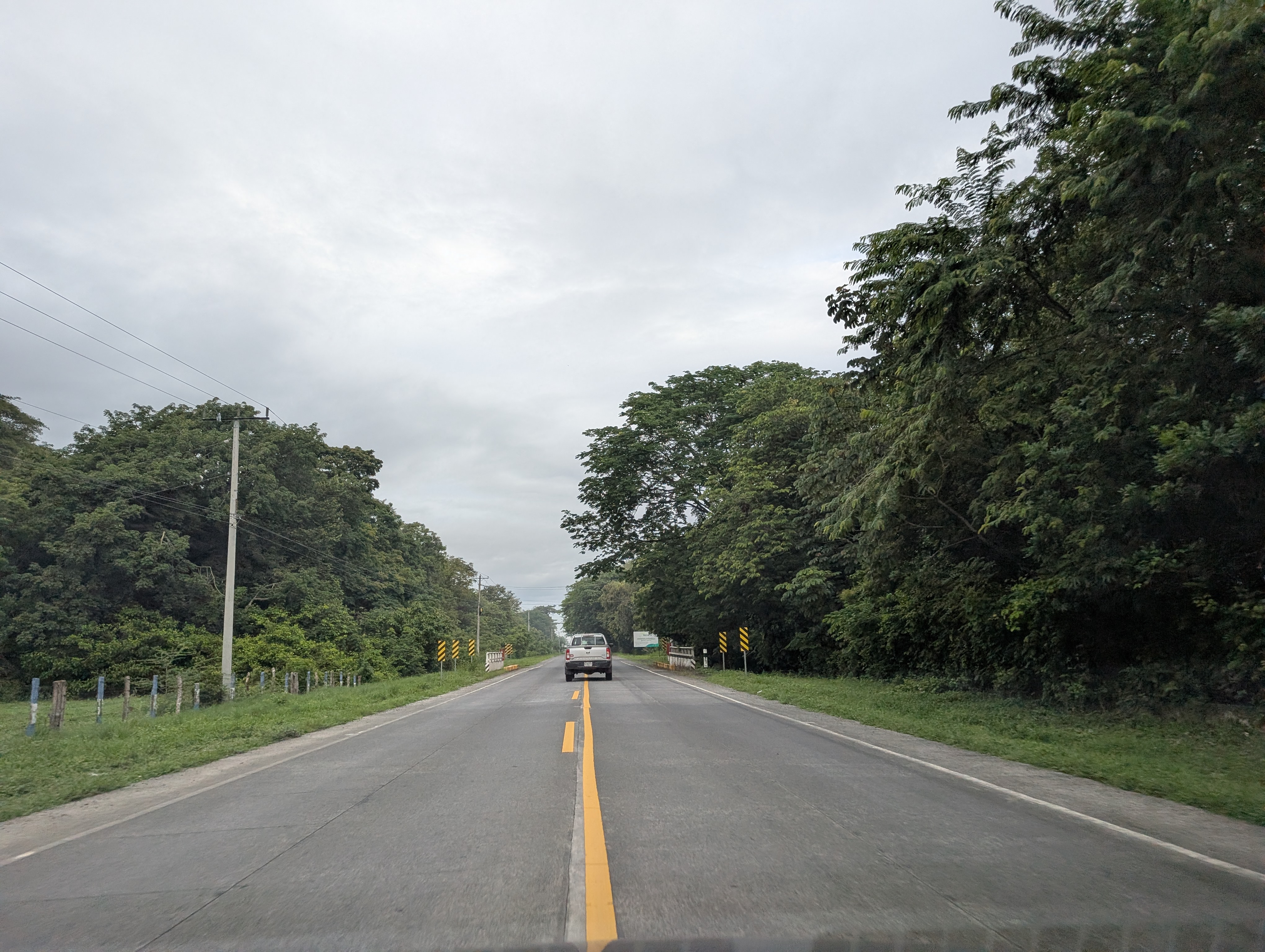
The Old Road from
Managua to León
Endless straight lines, hidden Pacific turns and an honest photo essay from the passenger seat.
The road looks empty. It isn’t. Most of what makes it interesting is hiding one turn away.
There are two main roads from Managua to León. The newer road passes through Nagarote and La Paz Centro. The older road begins near Nejapa, follows the corridor toward Villa El Carmen and meets the newer route again near Izapa. Both roads reach the same city. They simply tell different stories along the way.
At NAVAO, we often use the old road. Not because it is overflowing with famous attractions. It is not. Not because every turn delivers another perfect postcard. There are not many turns.
We use it because it can be a calm, direct and comfortable way to leave Managua behind and move toward León. On this documented journey, traveling at a sensible pace and under favorable conditions, the drive took approximately one hour and forty minutes. That is our observed time from this trip, not a guarantee.
A Road Photographed by the Copilot
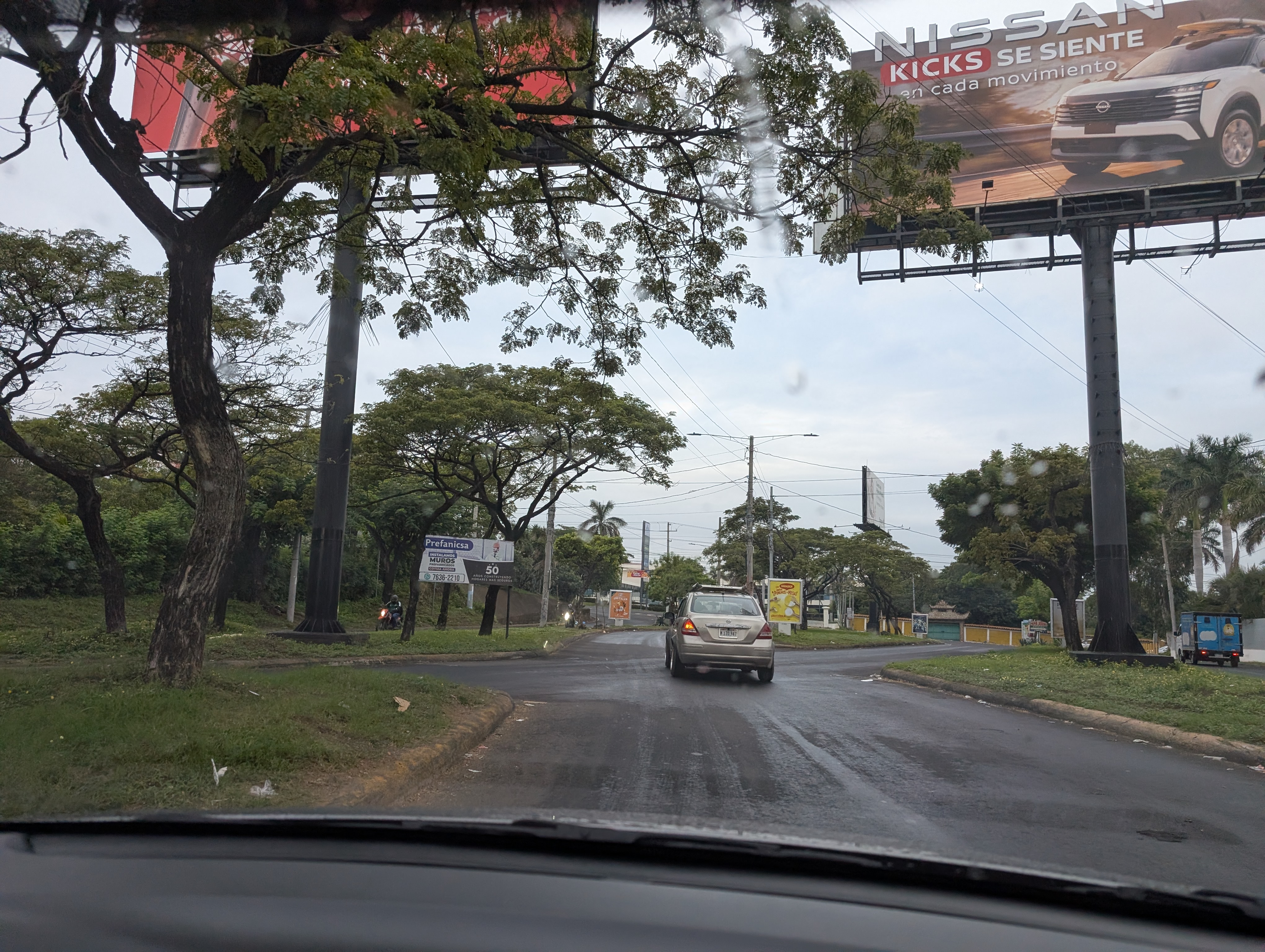
This story was photographed from the passenger seat during a real NAVAO journey.
No scenic viewpoints were reserved. The vehicle did not stop every time the light became interesting. The driver did not reverse because the copilot photographed a road sign approximately two seconds too late.
Some images are sharp. Some are slightly tilted. Some contain window reflections. A few suggest that the photographer and the horizon had different opinions about what “level” means.
We like them anyway.
These are not tourism-board photographs pretending that every kilometer between Managua and León is cinematic. They show the journey as passengers actually experience it: through the windshield, through the side window and occasionally through a piece of glass the copilot probably should have cleaned first.
The photographs may not be perfect. The road is real. That is what makes the collection worth keeping.
The journey begins with traffic, businesses and a windshield that had already seen enough of the morning.
First, You Have to Escape Managua
The journey begins around the Pista Suburbana and the western exit from Managua.
At first, everything still feels urban: businesses, traffic, intersections, neighborhoods, motorcycles and drivers making decisions in ways that may not always be communicated in advance.
Managua does not end dramatically. There is no ceremonial gate. Nobody announces:
“The capital has now concluded. Please prepare for agriculture.”
Instead, the buildings begin to spread out. Traffic gradually becomes lighter. The roadside becomes less crowded, and the city slowly releases you.
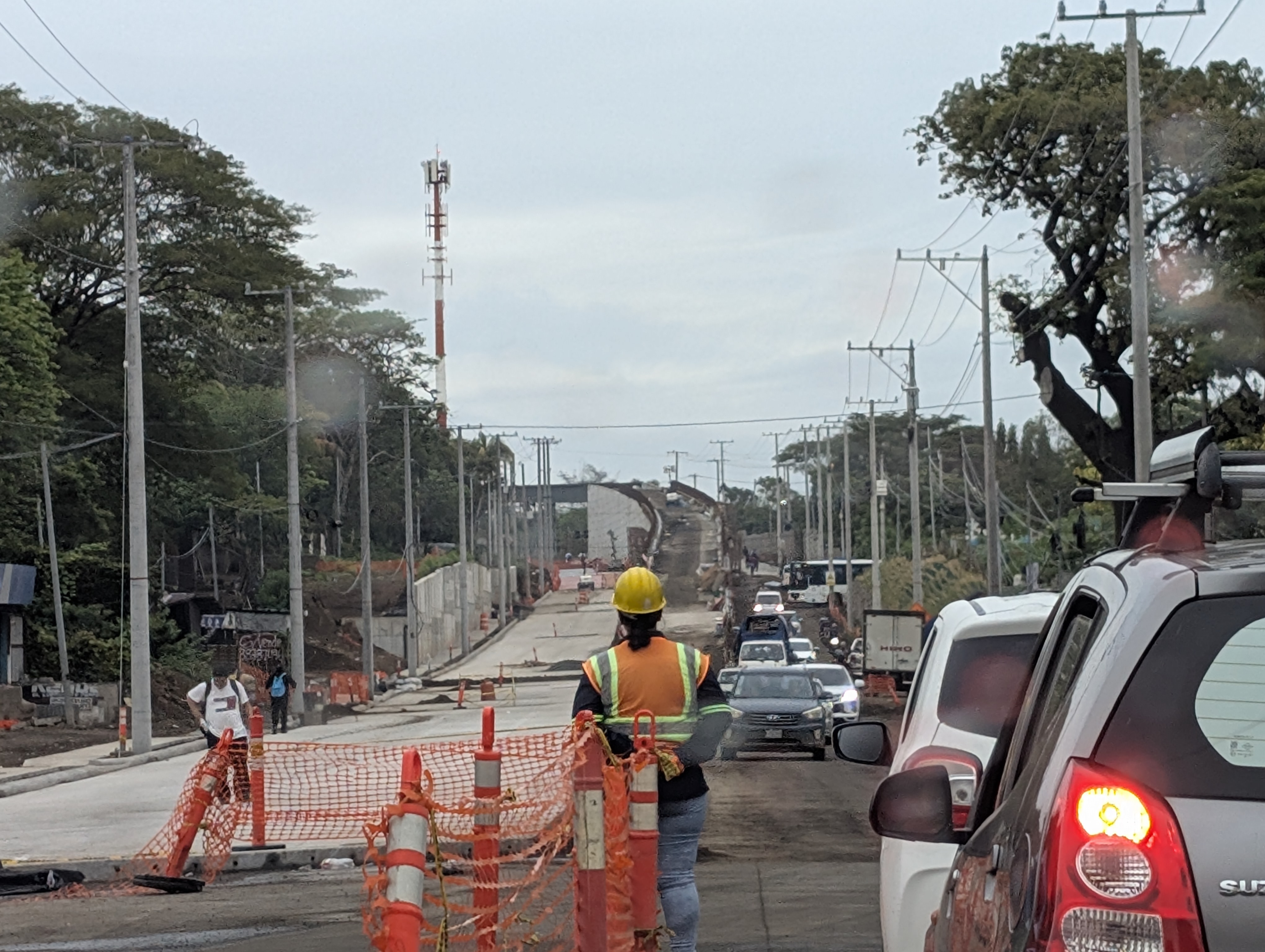
At the time of our drive, road construction was visible around the Carretera Vieja a León and Carretera Sur junction near Nejapa. If the first photographs contain barriers, equipment or a lane that appears to be reconsidering its original purpose, there is an explanation.
The Carretera Sur climbs toward El Crucero. We do not. We remain on the lower western corridor and continue toward Villa El Carmen and León.
Leaving Managua required patience, temporary lanes and complete faith in the orange cones.
The City Does Not End All at Once
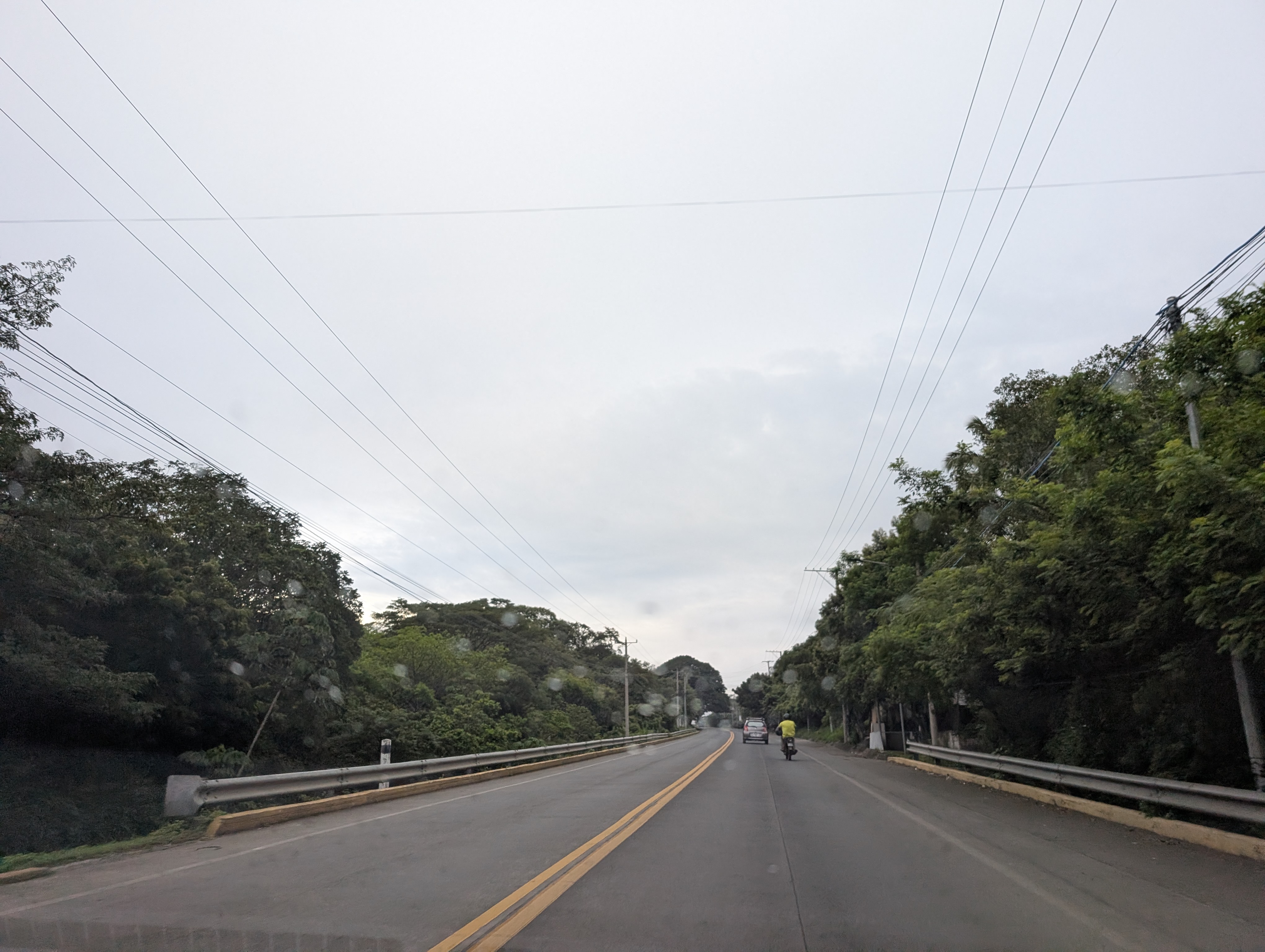
The transition happens gradually.
Traffic becomes lighter. Buildings become less continuous. Trees begin occupying more of the frame, and the road allows itself a few final curves before the long straight sections begin.
For a while, the journey sits somewhere between city and countryside. There are still bus stops, small businesses, homes and local traffic, but Managua no longer controls the entire view.
Before the long straight sections, the road still allows itself a few curves.
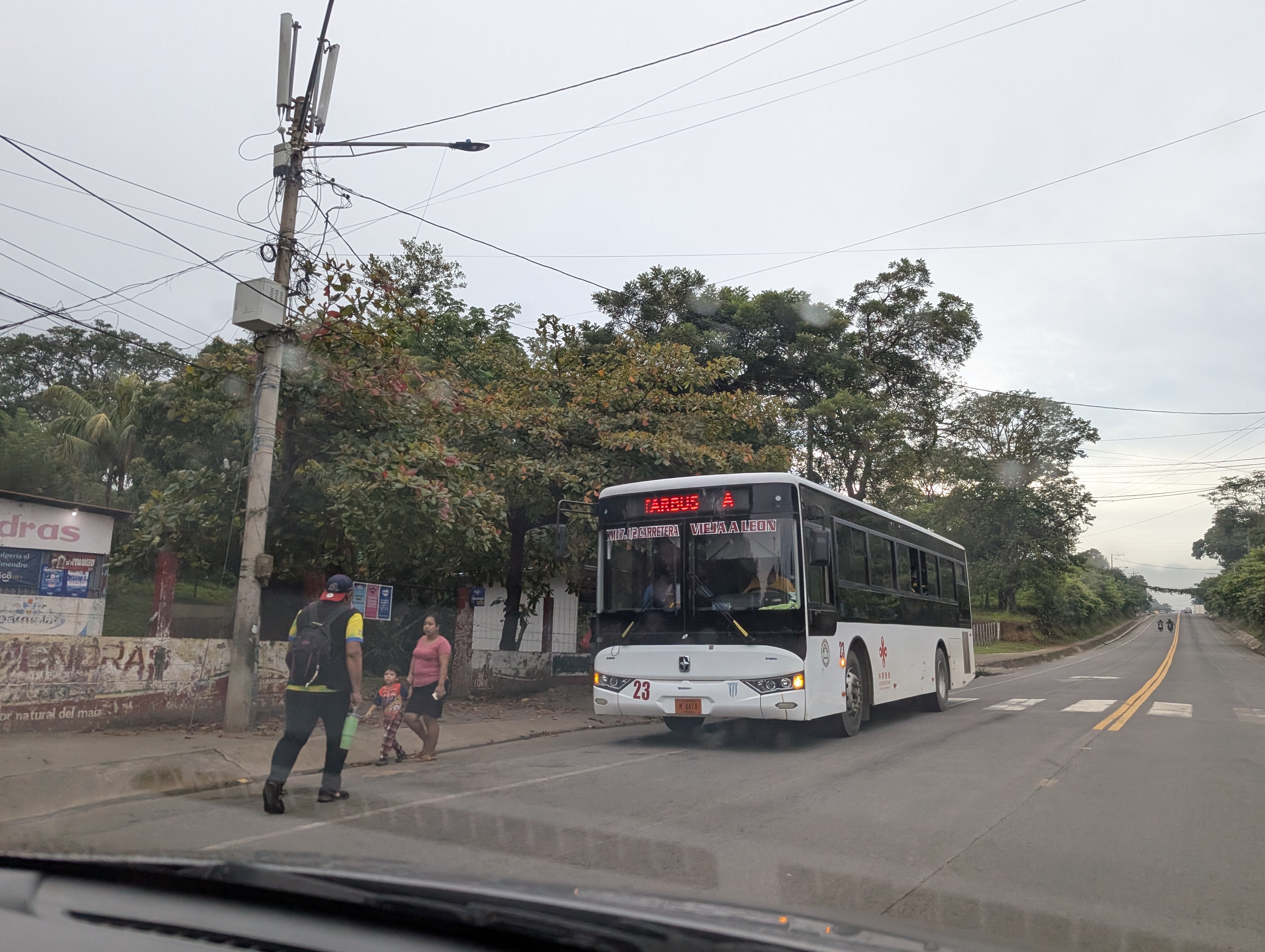
A Working Road, Not a Scenic Route
The old road is not designed as a tourist attraction. It is a working road.
Buses stop beside it. Motorcycles connect nearby communities. Trucks move supplies. Small businesses serve local traffic. People wait near bus stops, animals appear beside the pavement and communities use the road as part of everyday life.
A visitor may experience this as a quiet highway to León. For the people living along it, the road is transportation, commerce and routine.
If the bus says “Vieja a León,” we are probably writing the right article.
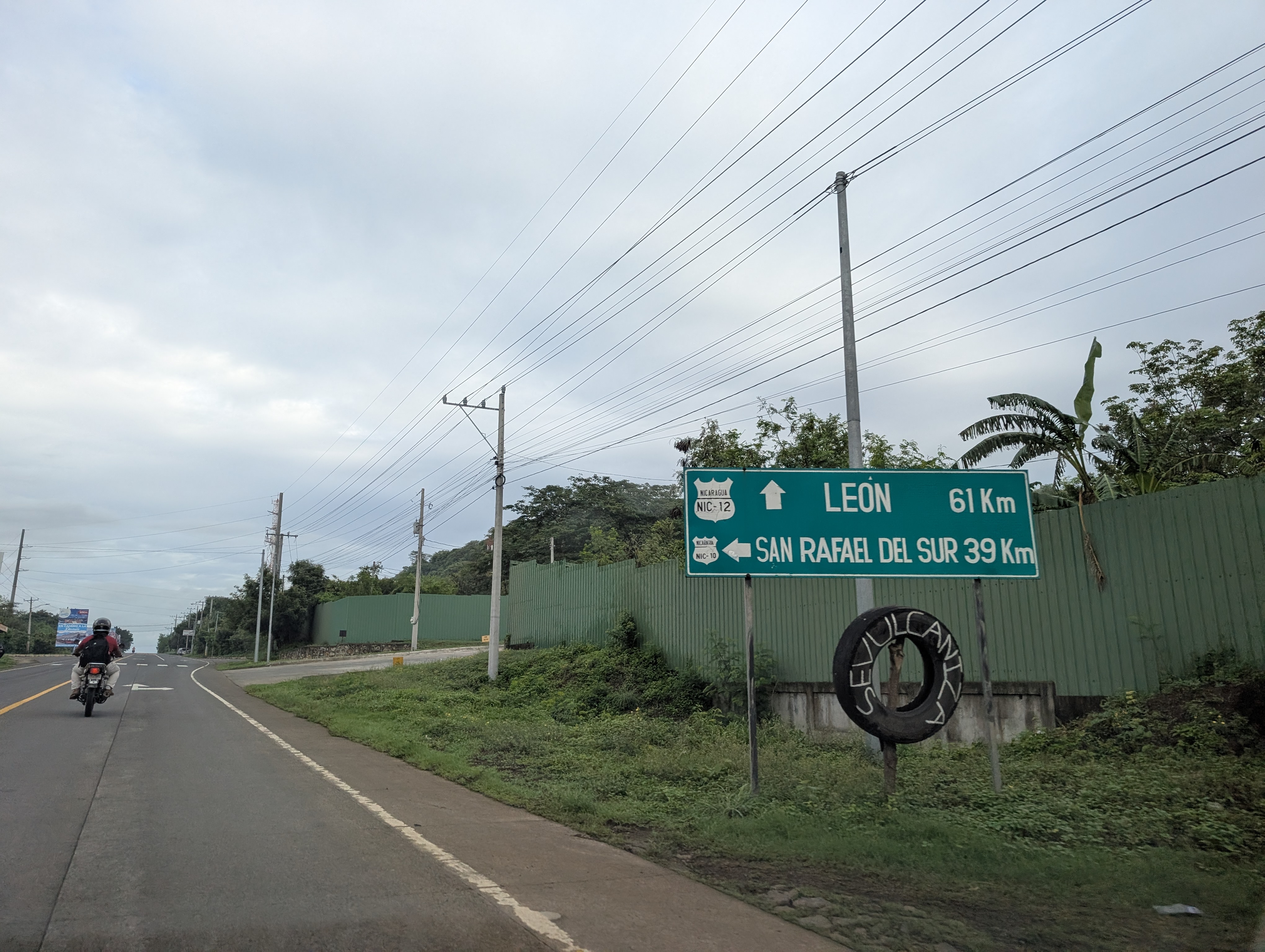
The El Boquete Connection
Farther along the corridor is a connection associated with El Boquete and Santa Ana.
The NIC-12C, commonly called the Carretera El Boquete, connects the higher terrain around El Crucero with Santa Ana and the lower corridor toward Villa El Carmen and the Carretera Vieja a León.
If you are traveling directly to León, this is not normally a turn you need to make. It is useful context, however. It explains why a substantial road occasionally disappears toward a landscape that appears to contain absolutely nothing.
The road is going somewhere. It is simply not where we are going today.
Straight ahead: León. Turn toward the southern corridor and the journey becomes a different part of western Nicaragua.
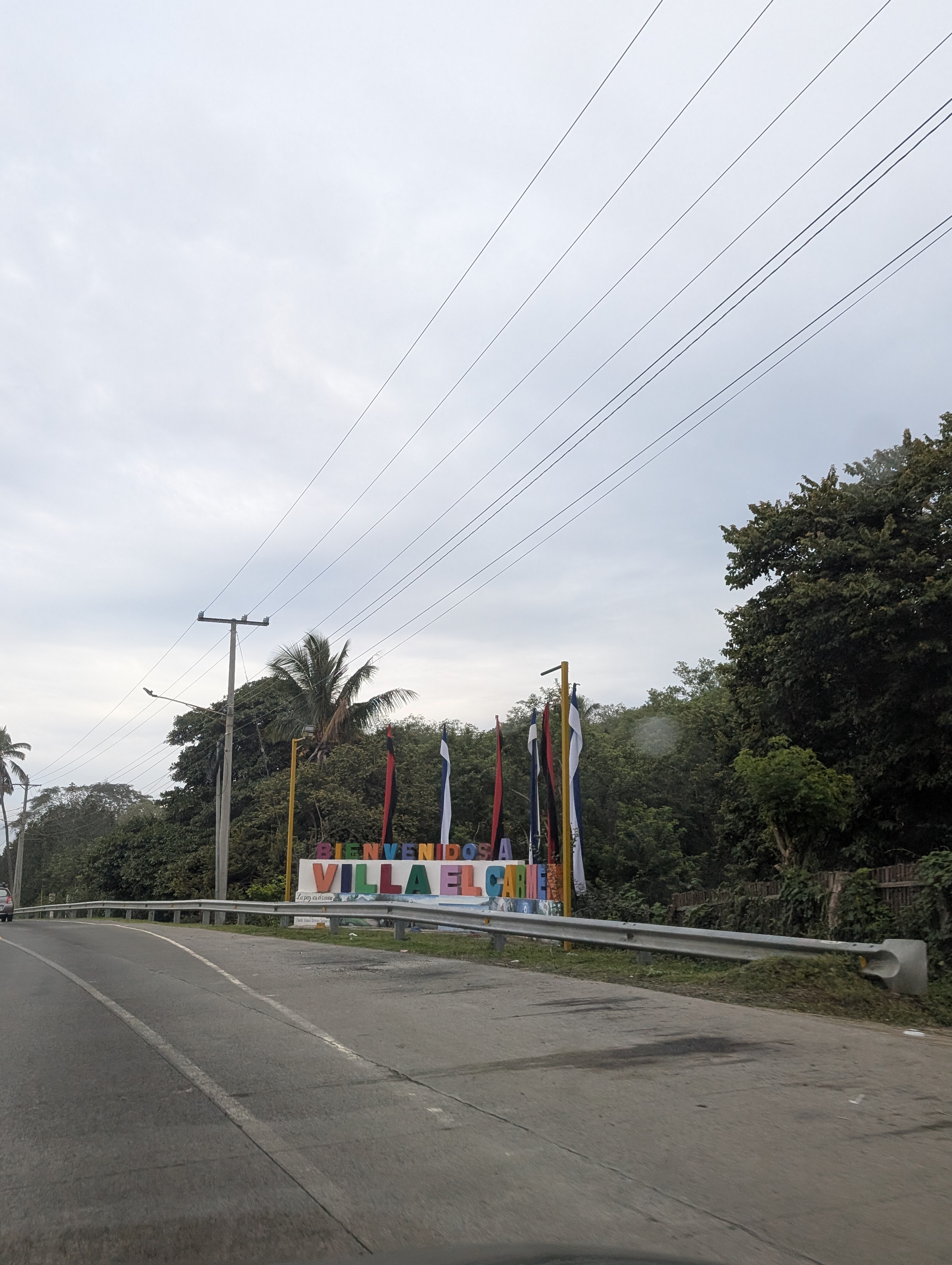
Villa El Carmen: The Last Major Plot Development
Villa El Carmen is the clearest populated reference in the first part of the route.
The roadside becomes active again. There are homes, businesses, local traffic, places to eat and junctions used by people whose daily plans do not involve publishing a travel guide.
This is also where the journey briefly suggests that the article may contain several major attractions.
Enjoy that feeling.
After Villa El Carmen, the road becomes much quieter. And much straighter.
Villa El Carmen is not only a waypoint on the way to León. It is part of a wider road network connecting the interior with Pacific destinations, including Montelimar, Masachapa, Pochomil, San Diego and surrounding coastal areas.
Turn toward the coast and the day becomes about beaches, seafood, salt air and Pacific sunsets. Continue straight and the sea remains somewhere to the side, invisible but never especially far away.
We continued straight. This blog already had one destination.
Villa El Carmen: the last major plot development before the horizon takes over.
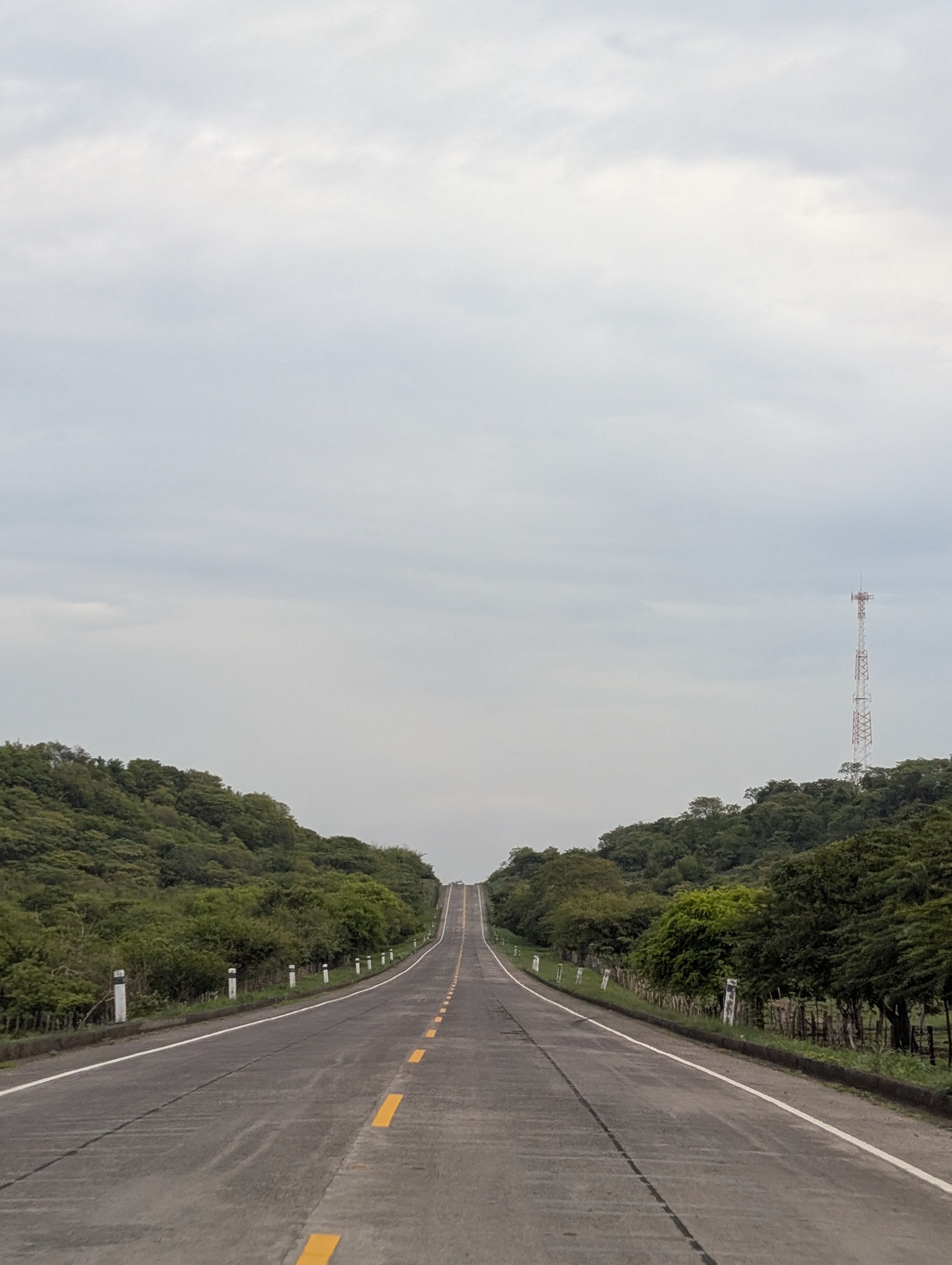
Then the Road Becomes the Road
After Villa El Carmen and the first coastal connections, the old highway settles into its defining rhythm.
There are fields. There are trees. There are utility poles. There is sky.
A truck appears and gives everyone something new to discuss for several seconds.
Then the road continues.
Straight.
And then, somehow, straighter.
The simplicity is exactly what makes the route pleasant. Urban traffic falls behind, the landscape opens up and the journey becomes easier to settle into.
If you want a relaxed drive to León, this is an excellent road. There are fewer urban distractions and long sections where the task is simply to continue forward.
One of several straight lines that were definitely not the same straight line.
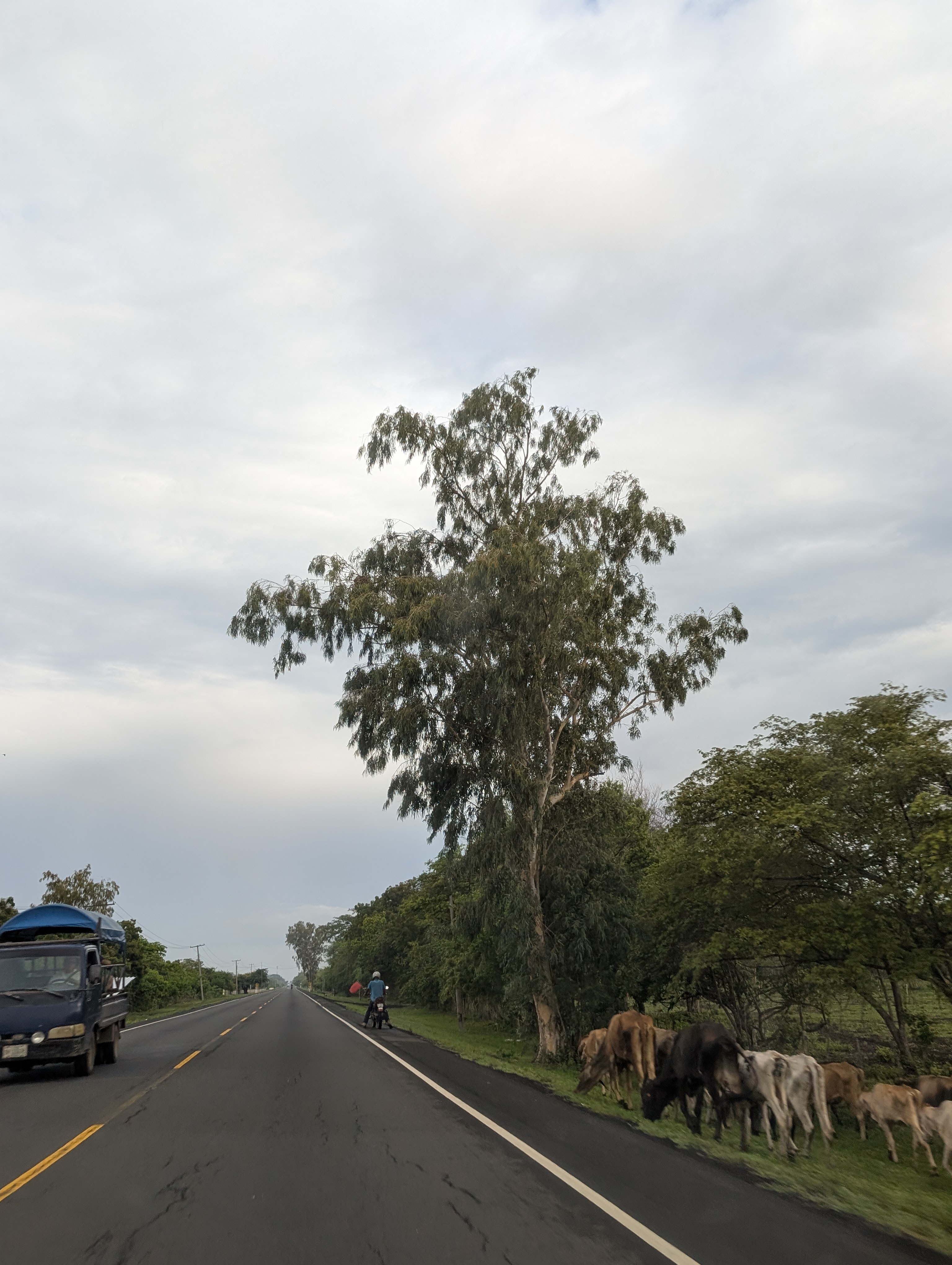
The Road Is Straight. Traffic Is Not Always Predictable.
A straight road can create a false sense of security.
The clear view ahead may make speed feel less noticeable than it is. A relaxed journey is not a race, and the open sections should not be treated as an invitation to discover the vehicle’s theoretical maximum.
There may still be buses, trucks, motorcycles, cyclists, pedestrians, animals, local traffic and vehicles entering from side roads.
The route is peaceful. It is not empty.
Long visibility does not mean an empty road. Local traffic may have four wheels, two wheels or occasionally four legs.
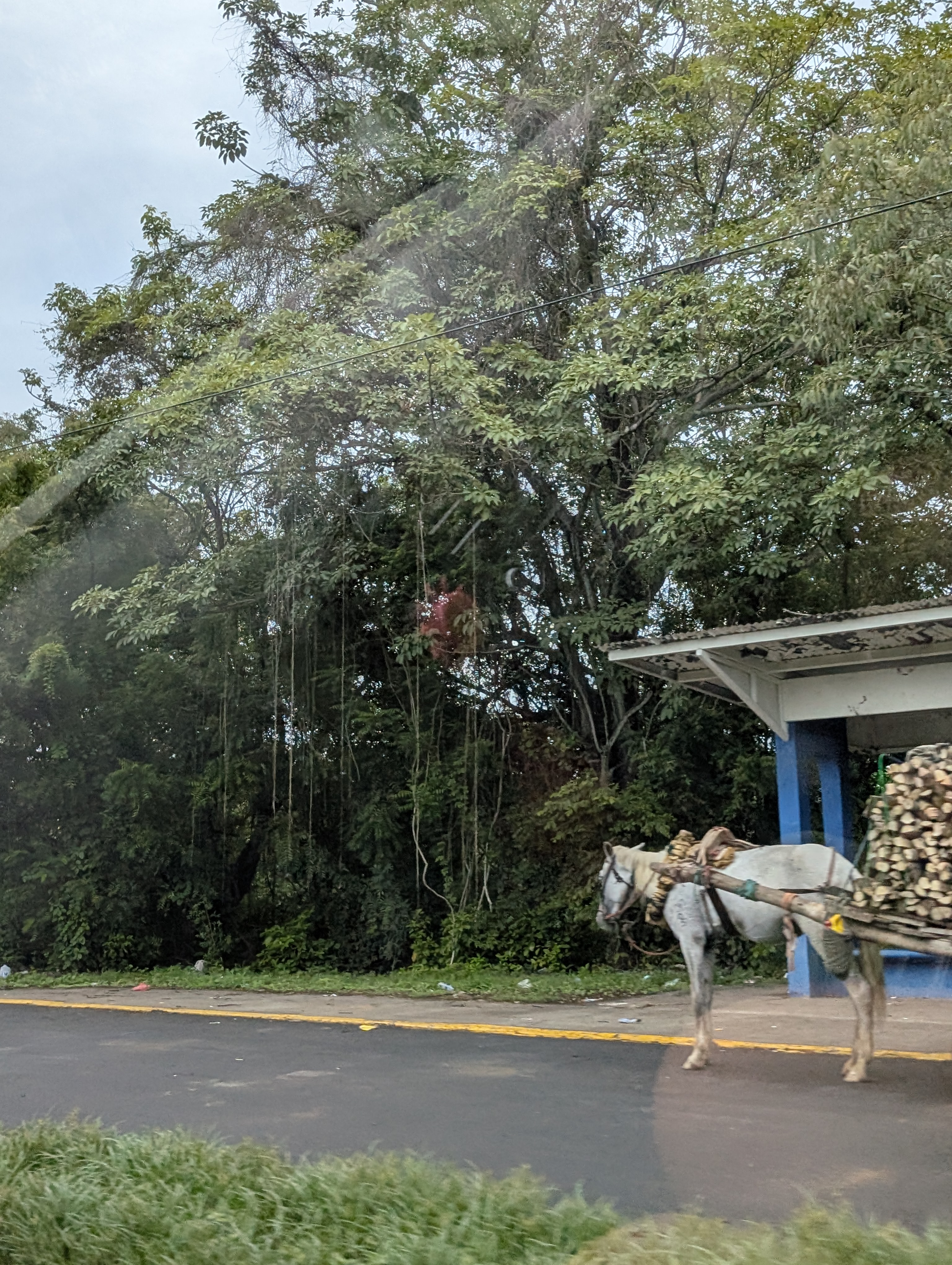
The Road Serves Everyday Nicaragua
The old road carries more than travelers moving between two cities.
It serves communities, buses, farms, local businesses and many kinds of transport. That variety is part of the journey and another reason to keep a comfortable pace.
The highway may look visually simple, but the life around it is not.
The road does not place its attractions beside the highway.
There are no lines of souvenir shops. There is no giant observation platform labeled “THE VIEW IS HERE.” Instead, the highway works as a spine. The interesting places extend from it.
Most passengers traveling to León continue straight past every junction. But knowing where those roads lead changes the way the landscape feels. The old road is quietly organizing access to a large part of Nicaragua’s western Pacific corridor.
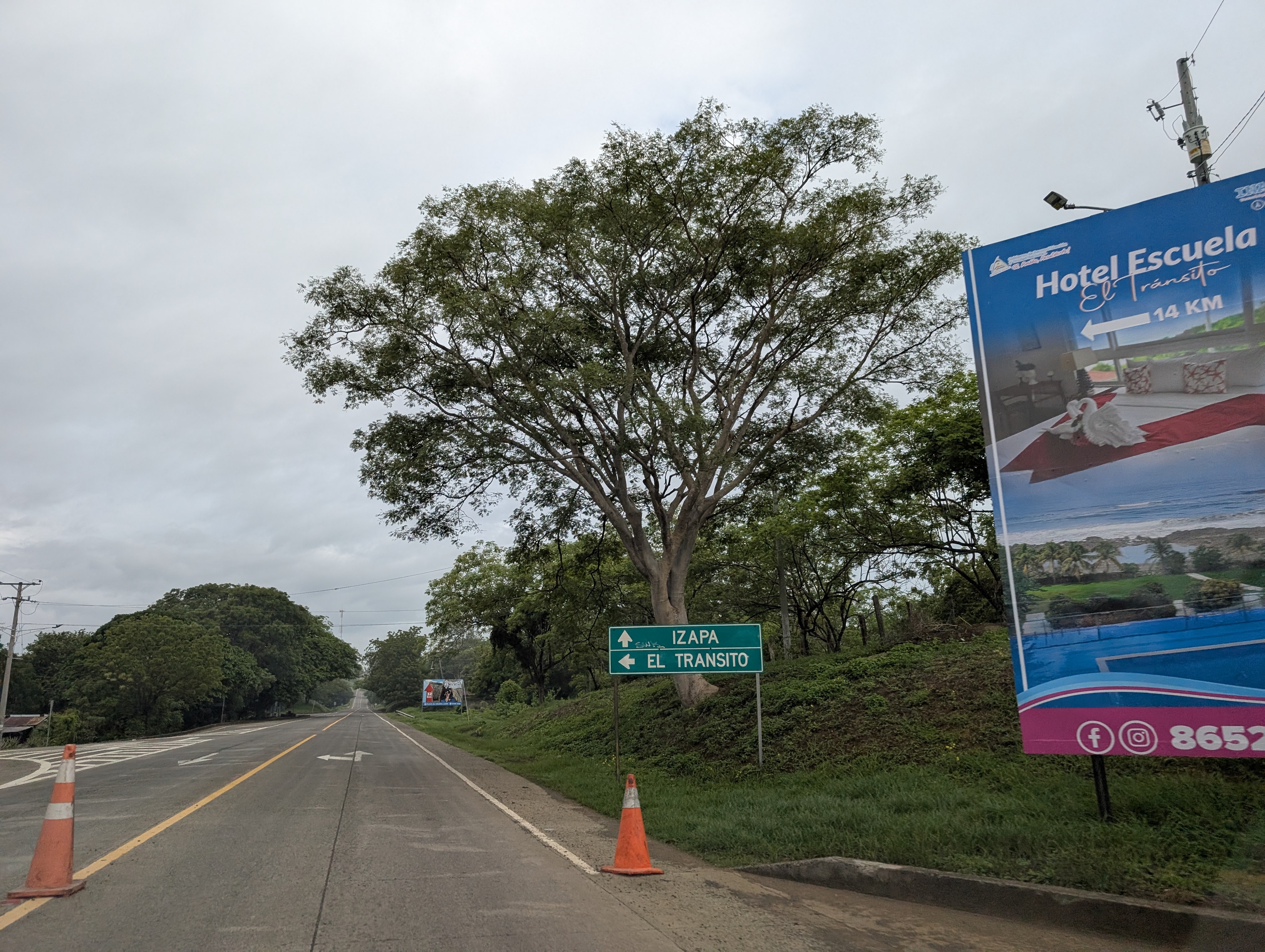
El Tránsito: Surf Hidden Behind an Ordinary Turn
One of the most interesting connections along the route leads toward Playa El Tránsito.
The junction sits along the old road, followed by another road toward the Pacific. El Tránsito is a fishing community and beach known for surfing, volcanic rock formations and natural pools visible at low tide.
Nothing about the highway junction fully prepares you for that change.
From the main road, it is simply another turn. Follow it, and concrete eventually becomes coastline. Fishing boats replace trucks. Surf, dark sand and natural pools become the important details.
We did not turn. León was still ahead.
El Tránsito deserves another guide, preferably photographed by someone standing still.
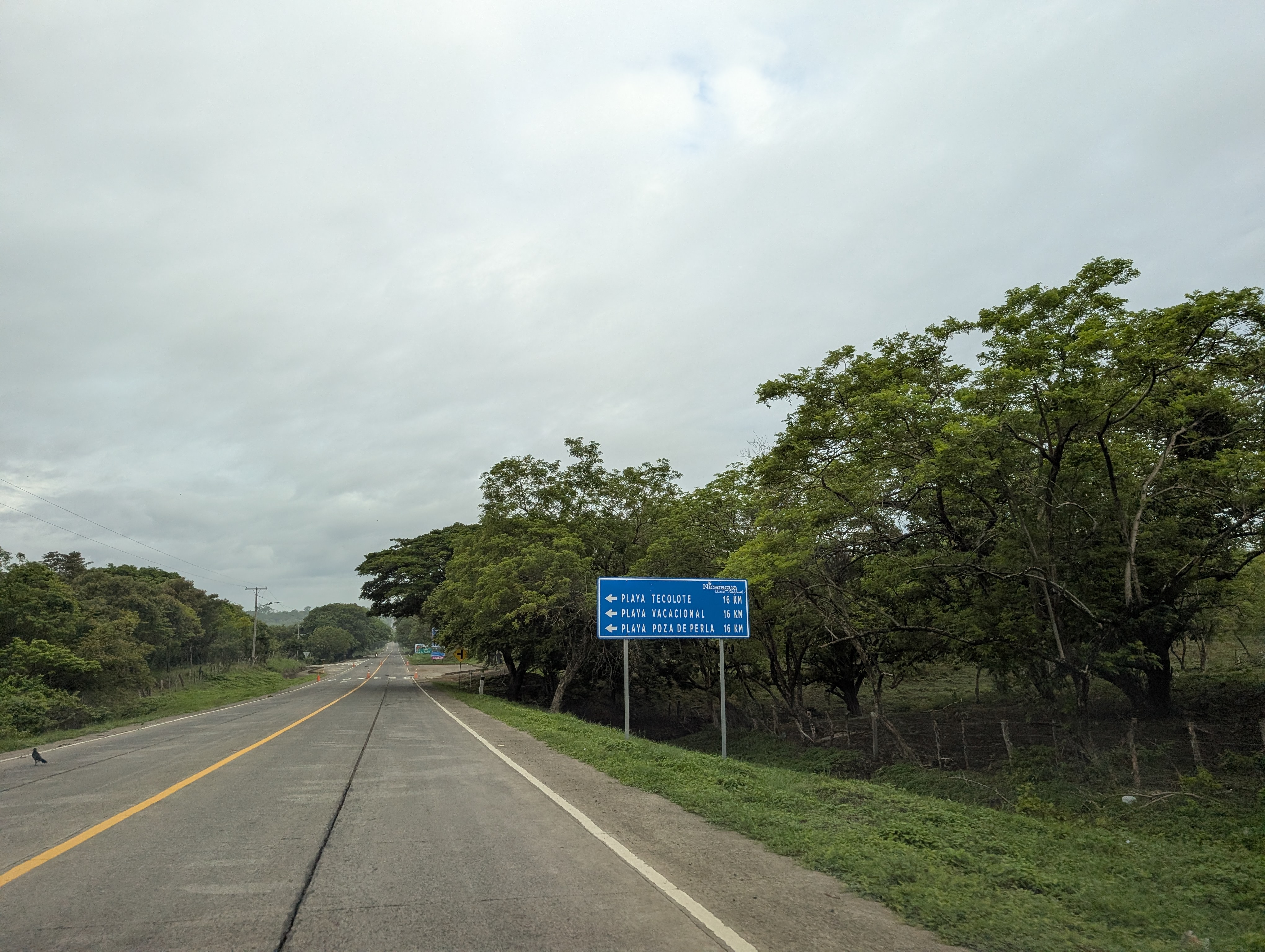
The Pacific Is Off to the Side
The old road does not follow the coast, and for most of the journey you cannot see the ocean.
Several junctions nevertheless lead toward Pacific communities and beaches. Names on roadside signs may only occupy a few seconds of a direct transfer, but each one begins another journey.
This is the central trick of the old road: it looks empty because much of what makes it interesting is not directly on it.
“The road looks empty. It isn’t. Most of what makes it interesting begins with a turn.”
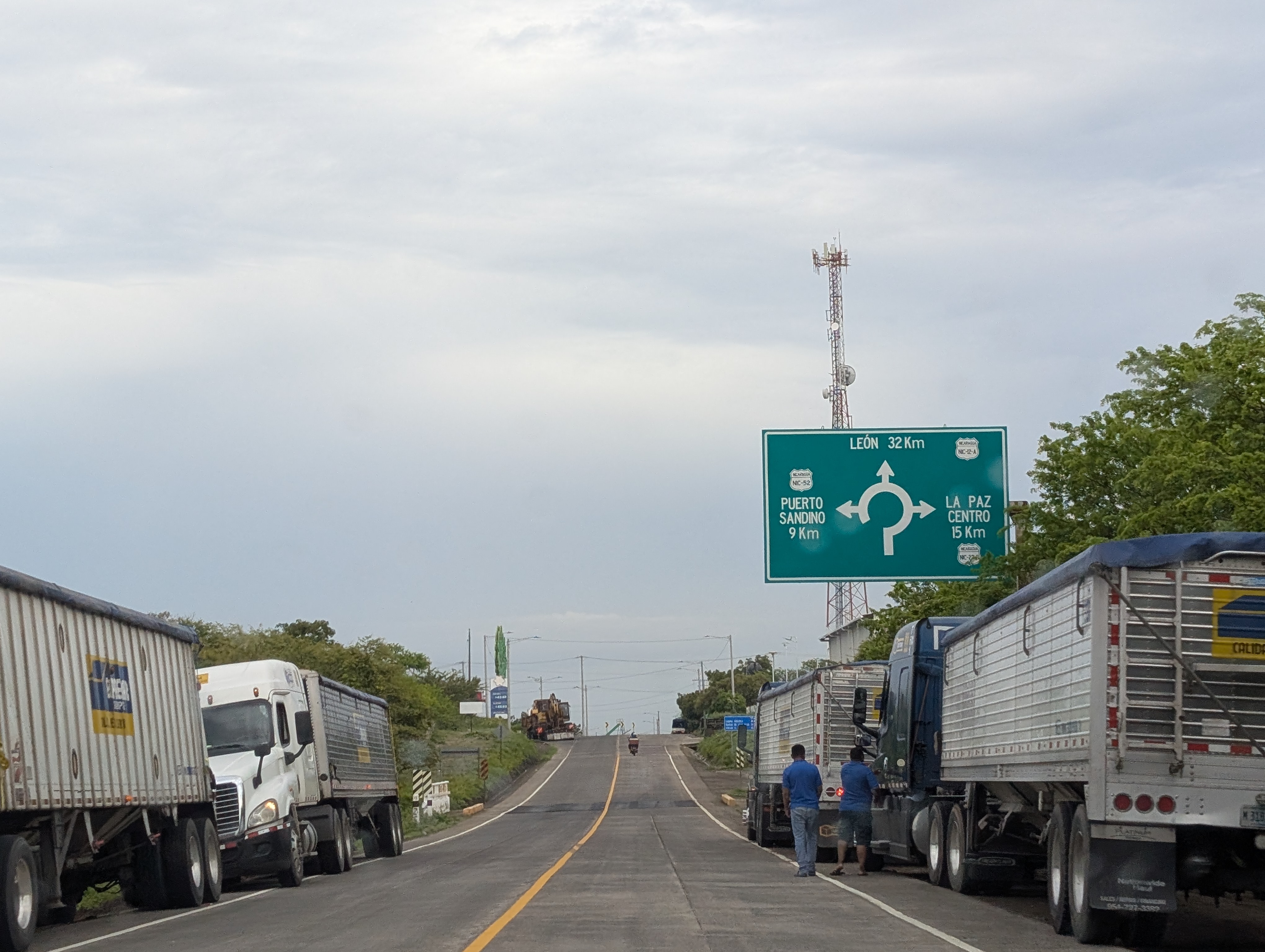
Puerto Sandino: Where the Road Leads to the Port
Farther along is the roundabout and junction toward Puerto Sandino.
Puerto Sandino is both a coastal community and an important Pacific port. The surrounding coast also connects with beach areas including Miramar, El Velero and El Tránsito.
Continue toward León and the journey remains inland. Turn toward the coast and the story becomes ports, fishing communities, surf and Pacific beaches.
We stayed on the highway. The copilot was already responsible for navigation, conversation, photography and maintaining the snack inventory. Adding a beach detour would have exceeded the department’s capacity.
The roundabout offers three directions, several trucks and no time for the copilot to reconsider the framing.
León Viejo Is Not the León at the End of This Road
One road name that can confuse visitors is León Viejo.
León Viejo is not an older neighborhood of the modern city. It is the original colonial location of León, now an archaeological site in Puerto Momotombo, in the municipality of La Paz Centro. The site stands near Lake Xolotlán and the Momotombo volcano.
That makes León Viejo a separate historical detour rather than a quick roadside stop on our direct journey.
It also deserves a separate article. A buried colonial city, a volcano, a lake and five centuries of history should not be reduced to: “There is a turn somewhere around here.”
León Viejo is the original colonial settlement and archaeological site. León is the living university city at the end of our journey. Same name. Different place. Very different blog.
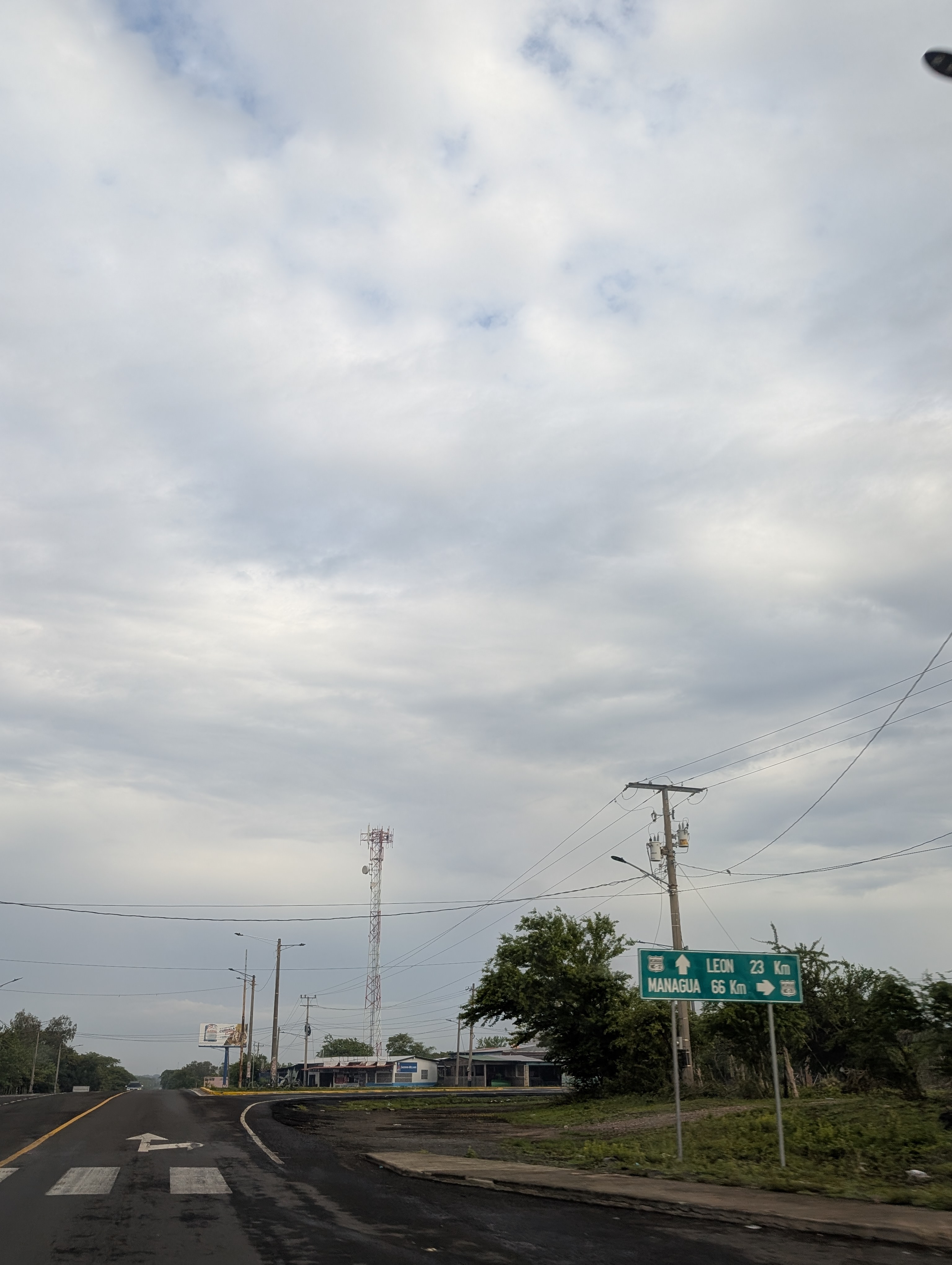
Izapa: Where the Two Roads Stop Arguing
Izapa is the major orientation point near the end of the old-road section.
The old road approaches Izapa from the Nejapa and Villa El Carmen corridor. The newer Managua–León route arrives after passing through Nagarote and La Paz Centro. From Izapa, traffic continues toward León.
This is where the two routes meet again.
They separate near Managua. They follow different communities. They offer different junctions and landscapes. Then they reconnect at Izapa and behave as though there was never any disagreement.
We continue toward León. After spending most of the journey explaining that there are two roads, Izapa quietly brings them together and ends the argument.
Salinas Grandes: One Final Road Toward the Pacific
Before reaching León, another junction leads toward Salinas Grandes.
From the highway, a separate road continues toward the community and coast. Salinas Grandes is known for its long Pacific beach, surfing, proximity to the Isla Juan Venado Natural Reserve, mangrove ecosystems and traditional sea-salt production.
This is one of the most visually interesting hidden connections along the road. Leave the highway and the landscape eventually changes from concrete and roadside vegetation to salt ponds, coastal communities, mangroves and the Pacific.
Continue toward León and the junction becomes another sign photographed from a moving vehicle.
We continued toward León. Salinas Grandes deserves its own day and its own copilot photography assignment, preferably with the camera already open before the turn.
Is It Worth Taking the Old Road?
Yes, when it fits the journey.
| Question | What to Know |
|---|---|
| Is it scenic? | In a quiet, honest way. Expect road, sky, vegetation and everyday local life rather than constant landmarks. |
| Is it comfortable? | It can be a calm and direct route when traffic and road conditions cooperate. |
| Is it empty? | No. Buses, trucks, motorcycles, cyclists, animals and vehicles from side roads still share the corridor. |
| Are there places to visit? | Most interesting destinations sit beyond connecting roads rather than directly beside the highway. |
| How long did NAVAO take? | Approximately one hour and forty minutes on this specific documented journey. |
| Is that time guaranteed? | No. Pickup point, traffic, construction, weather, stops and the final destination in León can change the total. |
The old road is a good option for travelers who want a calm transfer, a quieter-feeling road, access to Villa El Carmen or the Pacific connections, and enough uninterrupted road for a long conversation, a playlist or several unsuccessful attempts to photograph the same horizon.
It may not be the best option every day. At NAVAO, the route should be selected according to the actual journey, not because one road has a more interesting nickname.
“Old road” does not mean an abandoned path from another century. “New road” does not mean a futuristic expressway with robot assistance. They are simply two established approaches to León.
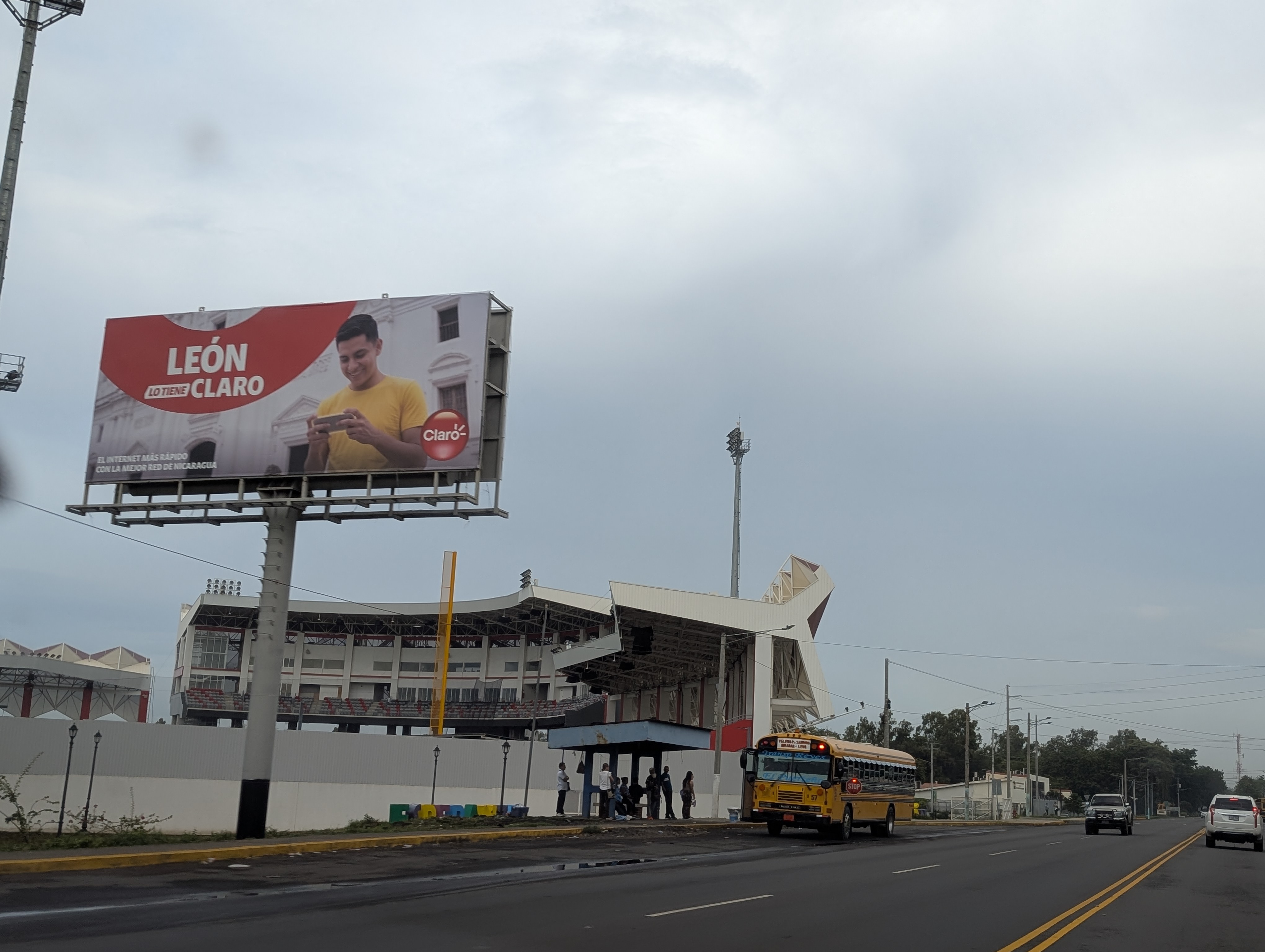
León Announces Itself Gradually
León does not arrive in a single dramatic moment.
First, traffic becomes denser. Then the roadside becomes more organized. Sports facilities, landscaped medians, signs and more frequent intersections replace the open highway.
The visual vocabulary changes. Roadside green becomes urban green. The horizon closes. Vehicles gather again, and the passenger-seat camera begins looking sideways rather than endlessly forward.
This is how you know the journey is almost complete.
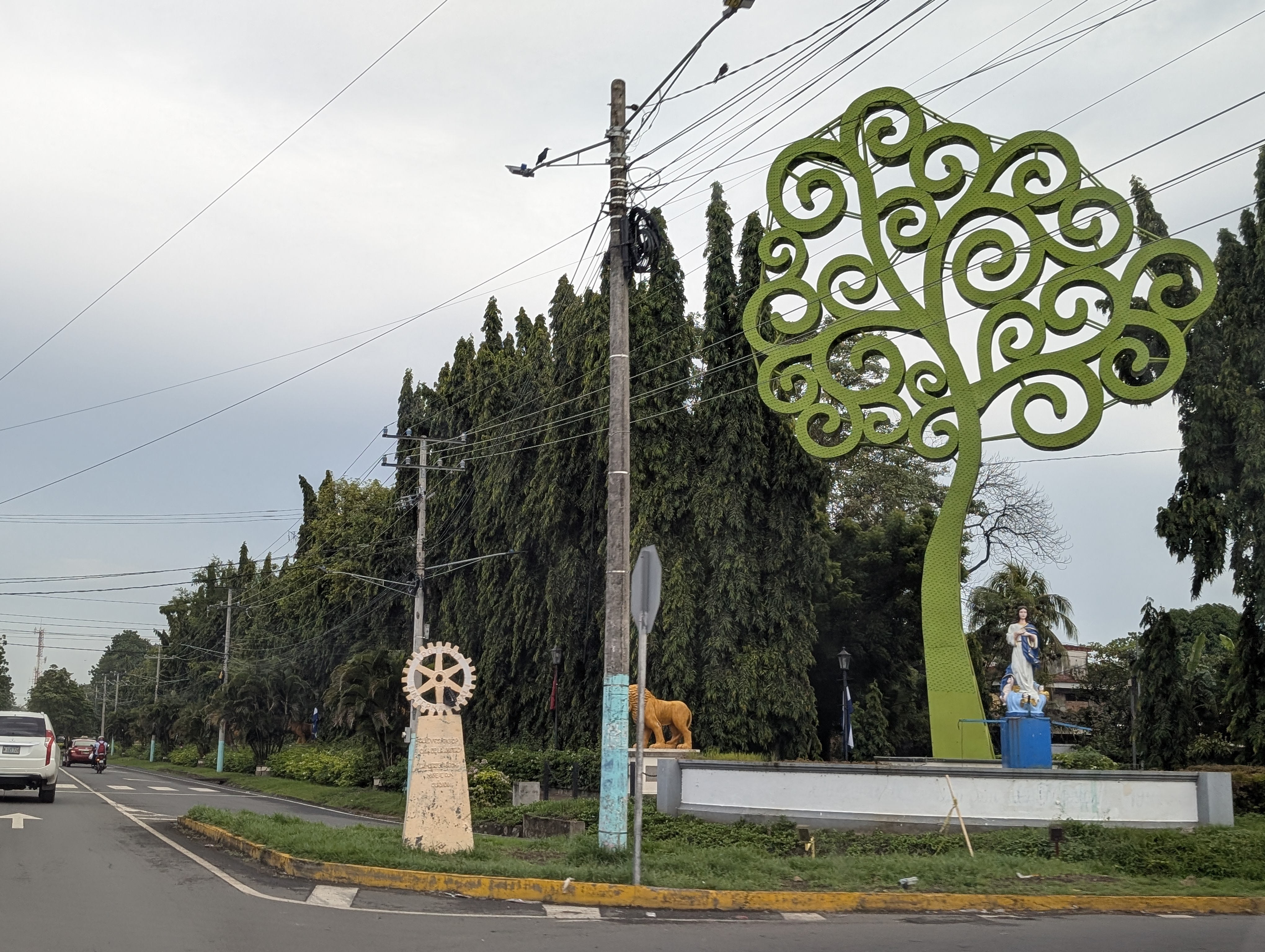
From Highway to City
After the long open road, León begins adding color, ornament and urban movement back into the frame.
The road is still carrying us forward, but it no longer feels like a highway between places. It feels like an entrance.
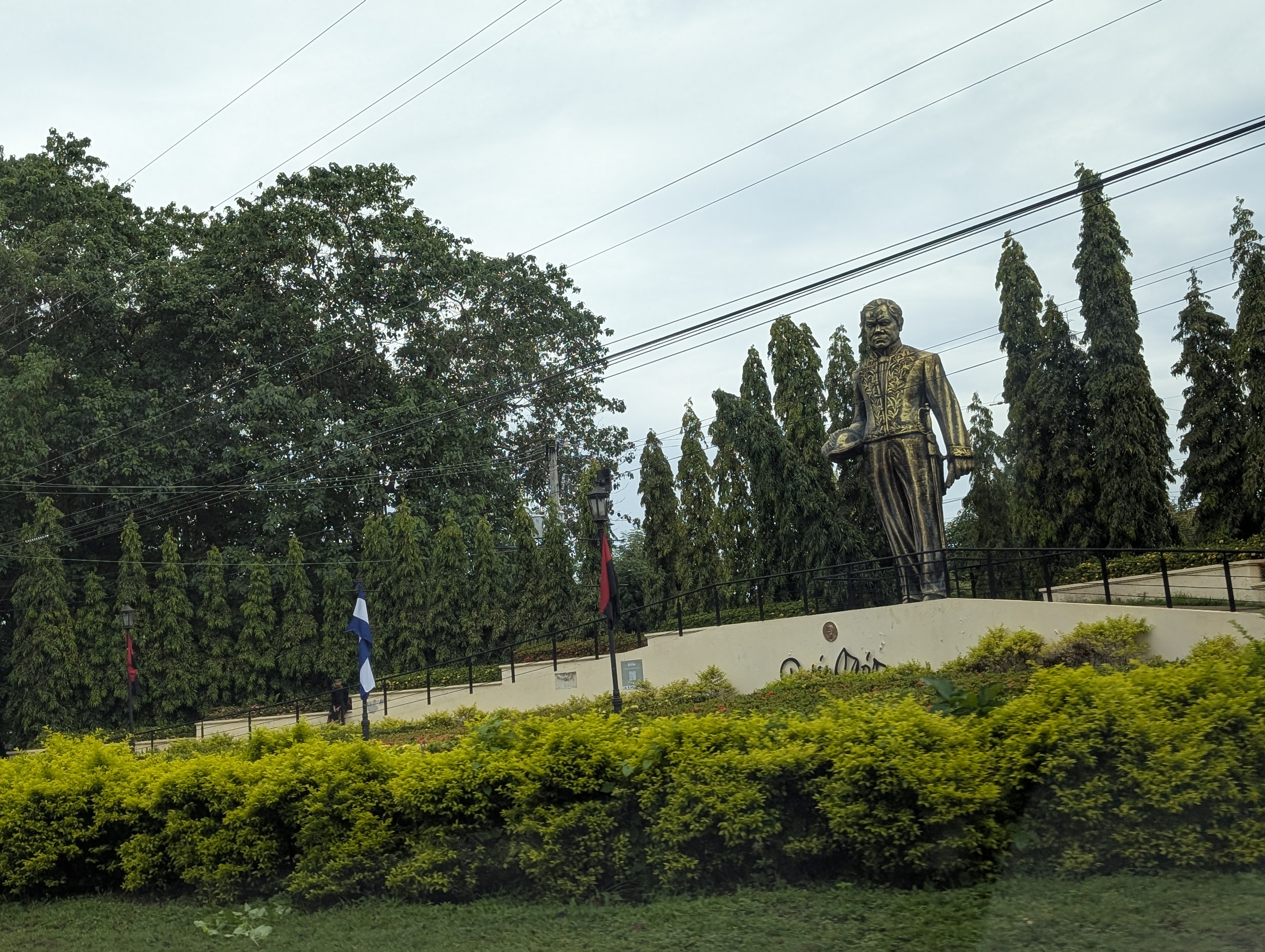
A City With Its Own Identity
By this point, the landscape is no longer anonymous.
León begins introducing the cultural references, public spaces and urban details that distinguish the city from the road that brought us here.
The highway has completed its job. The city is taking over the story.
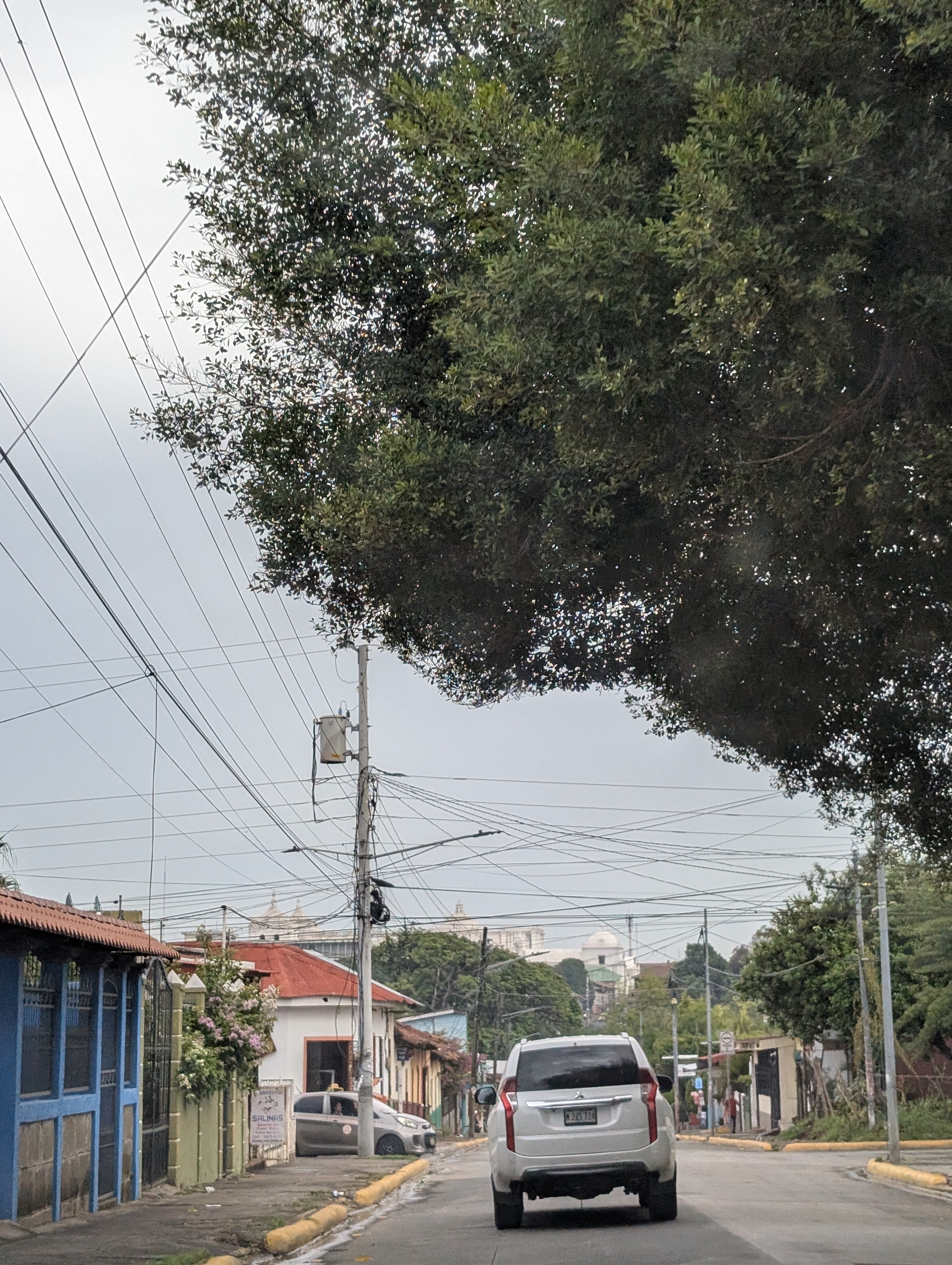
For most of the journey, León exists only as a destination on a road sign.
Then the city begins.
Streets become narrower. Homes and businesses move closer to the vehicle. Traffic slows, trees shade parts of the road and the open highway becomes an urban route.
Finally, in the distance, the cathedral appears.
It is not yet the monumental white structure visitors recognize from the central plaza. From the road, it first appears as a quiet point of orientation above the city.
After the construction, traffic, communities, crossroads, coastal possibilities and long straight lines, the cathedral answers the simplest question of the journey:
Yes. You are in León now.
The copilot took one last photograph. It may not be perfectly framed. The destination is unmistakable.
A quiet road where almost every interesting place begins with a turn.
There are two main roads from Managua to León. We often take the old one. It can be calm, direct and well suited to a comfortable transfer.
You will not find a famous attraction beside every kilometer. You will find Managua’s western edge, Villa El Carmen, rural communities, open landscapes, long straight roads and several junctions leading toward places that deserve journeys of their own.
And if your only intention is to reach León peacefully, you can ignore every one of those turns, continue forward and enjoy the quiet.
Verify changing road and destination details before travel.
The highway is simple. Planning the journey should be too.
NAVAO provides private transportation between Managua and León, with pickup arranged around your location, schedule, luggage and group.
We select the route according to the day, current traffic and where the journey actually begins. Sometimes that means the newer road. Sometimes it means the old road, several endless straight lines and a long conversation with the horizon.
By NAVAO · Published October 2026 · Private transportation across Nicaragua